

The only thing special about the doorway was how un-special it appeared. Yet to enter was to pass through a portal as magical as the wardrobe in the beloved novel by C. S. Lewis.
Instead of traveling to Narnia, I not long ago stepped across a threshold from 2026 into 1878.
A white sign above the entryway, in a simple print font in black, read: “AWAY Dressing Room.” Along with its antiquated “HOME” counterpart, the visitor’s quarters are located inside the original Members Pavilion of the historic Sydney Cricket Ground and date back to the first cricket match played in the stadium 148 years ago. Nearly unchanged now from then, both Spartan rooms are still used by today’s stars.
The away dressing room is not a locker room for it has no lockers. Instead, wooden cubby units, each about a foot wide and five-feet high with one shelf at the top, line the walls with uncomfortable wood-slatted benches between groupings of two. Above every bench are three simple metal hooks, a modern upgrade from once-upon-a-time nails.
The cubbies are not without some magic for they are adorned with names and initials carved by pocketknives or scratched with nails, and also written in pencil and markers of blue and red and black. One can almost feel ghosts in the room and imagine not only yesteryear, but yester-century.
The rectangular dressing area is about the size of a wealthy man’s walk-in closet and connects, up four red-tiled steps, to a smaller room with showers, sinks, toilets.
The brick walls throughout are covered by layer upon layer of paint, thick as face makeup on an aging stage actress, the current color being the same cream as throwback cricket flannels.
A couple windows and a single fan hanging from high overhead serve as air conditioning. The ceiling, covered with pressed tin tiles, also features bare metal pipes running along two sides. Only a short florescent tube light betrays the 19th century.
The home dressing room and showers are larger, but not grandly so, although it does have true locker stalls and padded benches. “The home-team advantage,” our tour guide said unapologetically.
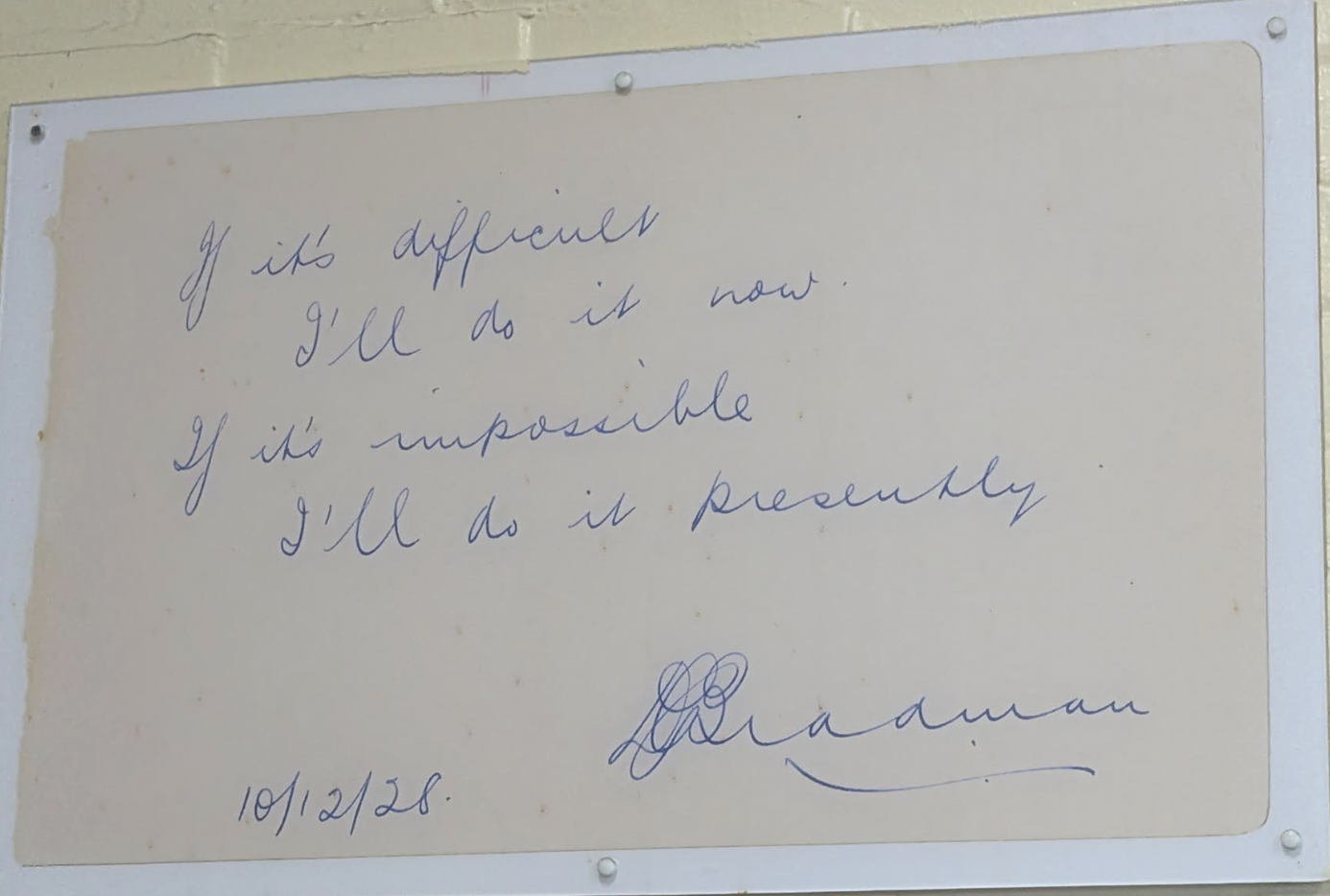
My favorite piece of nostalgia was a piece of yellowed paper, slightly larger than a placemat, displayed proudly and prominently above the doorway to be seen when exiting the home dressing room. It is a note, protected behind glass, handwritten by Sir Donald Bradman, the Babe Ruth of Australian cricket players. In easily legible cursive, in blue ink, with his underlined one-word signature “DGBradman” and date “10/12/28” at the bottom, it reads:
If it’s difficult / I’ll do it now
If it’s impossible / I’ll do it presently
The movie “Dead Poets Society” instantly came to my mind, and heart, specifically the scene when English teacher John Keating, played by Robin Williams, addresses his male teenage students in front of a venerable trophy case. The youthful faces in the century-old photographs within were once just like them, he says, full of passion and hopes and dreams and feelings of invincibility, but are now “fertilizing daffodils.”
“We are all food for worms, lads,” Mr. Keating continues, then memorably concludes by telling the boys the Latin term carpe diem – seize the day.
I imagined Sir Bradman, and the other star lads whose names adorn the wood-paneled lists of batting and bowling feats hanging in the two timeless dressing rooms, back when they were young and in their prime hitting “sixes” and throwing “jaffas” before becoming worm food.
Carpe diem. Do it now. Do it presently. The daffodils may bloom tomorrow.
* * *
Essay copyrights Woody Woodburn

Woody’s new novel “The Butterfly Tree” is now available in paperback and eBook at Amazon (click here), other online bookstores, and is orderable at all bookshops.
*
Woody writes a weekly column for The Ventura County Star and can be contacted at WoodyWriter@gmail.com. Follow him on Twitter and Instagram at @woodywoodburn.