
The late Henry Lawson, known as “The People’s Poet” of Australia, could not have adequately described the lovely grandeur of the Sydney Opera House in a poem, even an epic one numbering a hundred pages.
Patrick White, the only Aussie to win the Nobel Prize in Literature, similarly in a full novel would have failed to do justice to this waterfront architectural marvel comprised of fourteen gracefully billowing “sails” – or “shells,” depending on the viewer’s imagination – shimmering with more than one million tiles on the outside.
Like the rarest of beautiful people, this World Heritage Site No. 166, which opened in 1973, is somehow even more breathtaking on the inside.
The day after My Much Better Half, herself outwardly beautiful and even more so inwardly, and I toured the Opera House we visited the Sydney Cricket Ground and had our breath taken away anew, and by surprise, by the gorgeous red-brick masonry and overall grandness that greeted us outside and the beautiful history waiting inside.
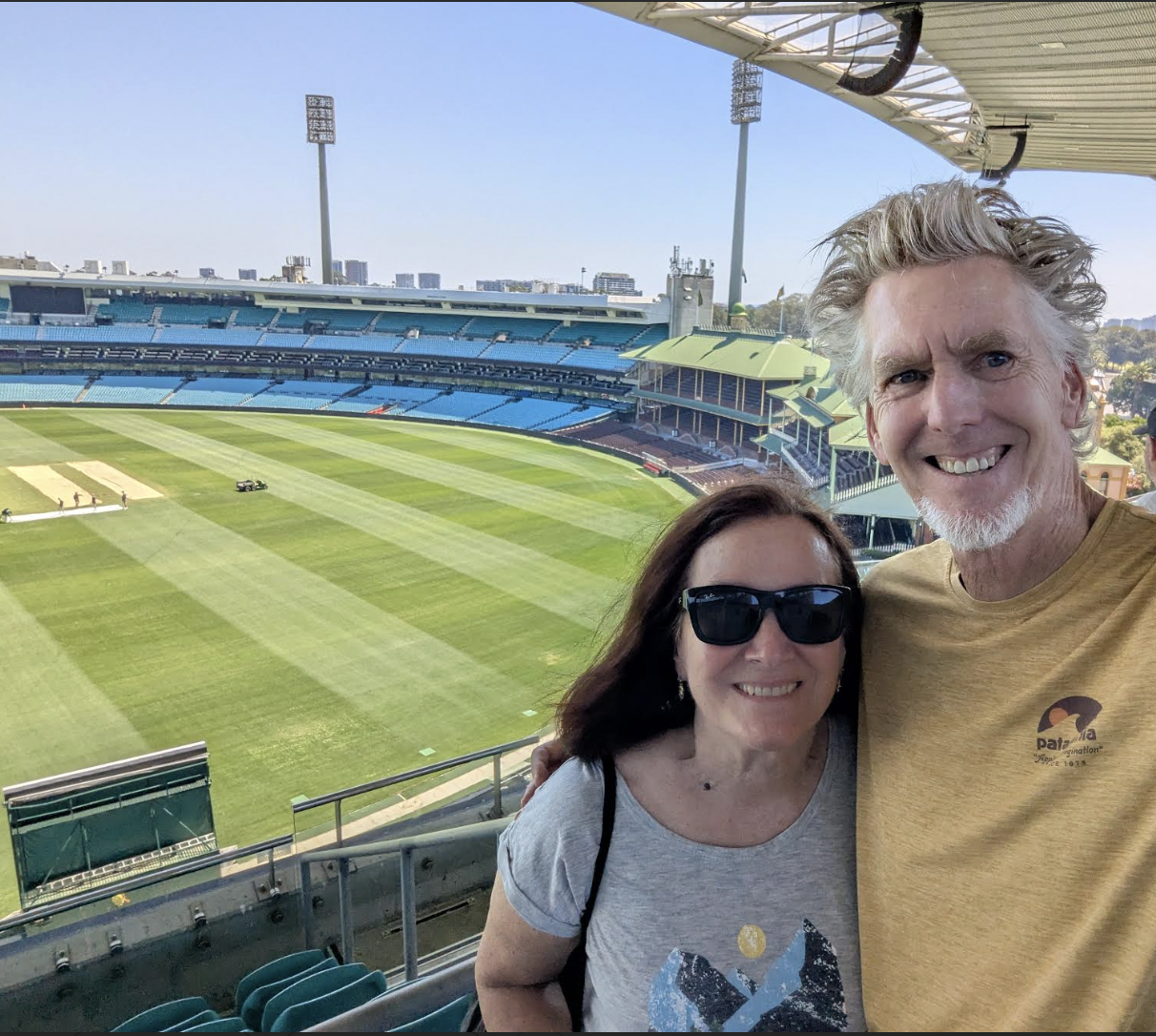
The Sydney Cricket House – my nickname for it, trademark pending – is a mere three miles from the Opera House but nearly a century removed, having been founded in 1878.
To put that in some perspective, Wimbledon’s historic Centre Court dates back to 1922 and Fenway Park, the oldest Major League Stadium, was built in 1912. With its preserved old-school architecture and dark-green palette, Sydney Cricket House looks like the shared grandfather of Fenway and Wimbledon.
A dear friend of mine, a travel writer of great merit, always reminds me before I depart on a trip to explore hidden alleyways and gateways and doorways because those are often portals to enchanted experiences.
The Sydney Cricket House is not exactly hidden down an off-the-beaten-path alleyway, but MMBH and I did seek it out almost by serendipity. With a couple hours to fill before heading to the airport on our final day in Australia, the stadium tour simply fit the time opening.
Jimmy Cricket were we surprised and enchanted!
The stadium has been expanded, time and again, and is now a double-decked circular structure, complete with towering lights for night matches, that holds 40,000 spectators. But in the northwest corner, shining like matching diamonds on a necklace, the original twin grandstands remain.
The Members’ Pavilion and Ladies’ Pavilion, as these grand old stands are named, look like something time forgot. Imagine old Yankee Stadium, with its wooden bleachers and support poles for the roof and ornate balustrades on the upper-deck seating, and add a clock tower – analog, of course! – top and center.
The grass “pitch” in the Sydney Cricket House is huge and oval, measuring 155 meters by 140 meters, and is as well manicured as Wimbledon’s Centre Court lawn.
The Members’ Pavilion, originally christened Men’s Pavilion, houses the Home and Away dressing rooms. Exiting these sanctums, players walk down an aisle amidst the spectators to get to the playing field where they make their entrance through “The Sir Donald Bradman Gate” – the Babe Ruth of Australian cricket – bearing a bronze plaque with bas-relief likenesses of his visage and in full swinging a bat, as well as a short biography.
On this day that saw the mercury rise up to 93 degrees – 34 Down Under in Celsius – it was all very cool to see.
Coolest of all, despite not being air conditioned, was seeing the original 19th-century dressing rooms that are still in use by today’s cricket superstars. Entering these doorways was to step through a magical portal to yesteryear and took my breath away.
I will escort you inside both next week.
* * *
Essay copyrights Woody Woodburn
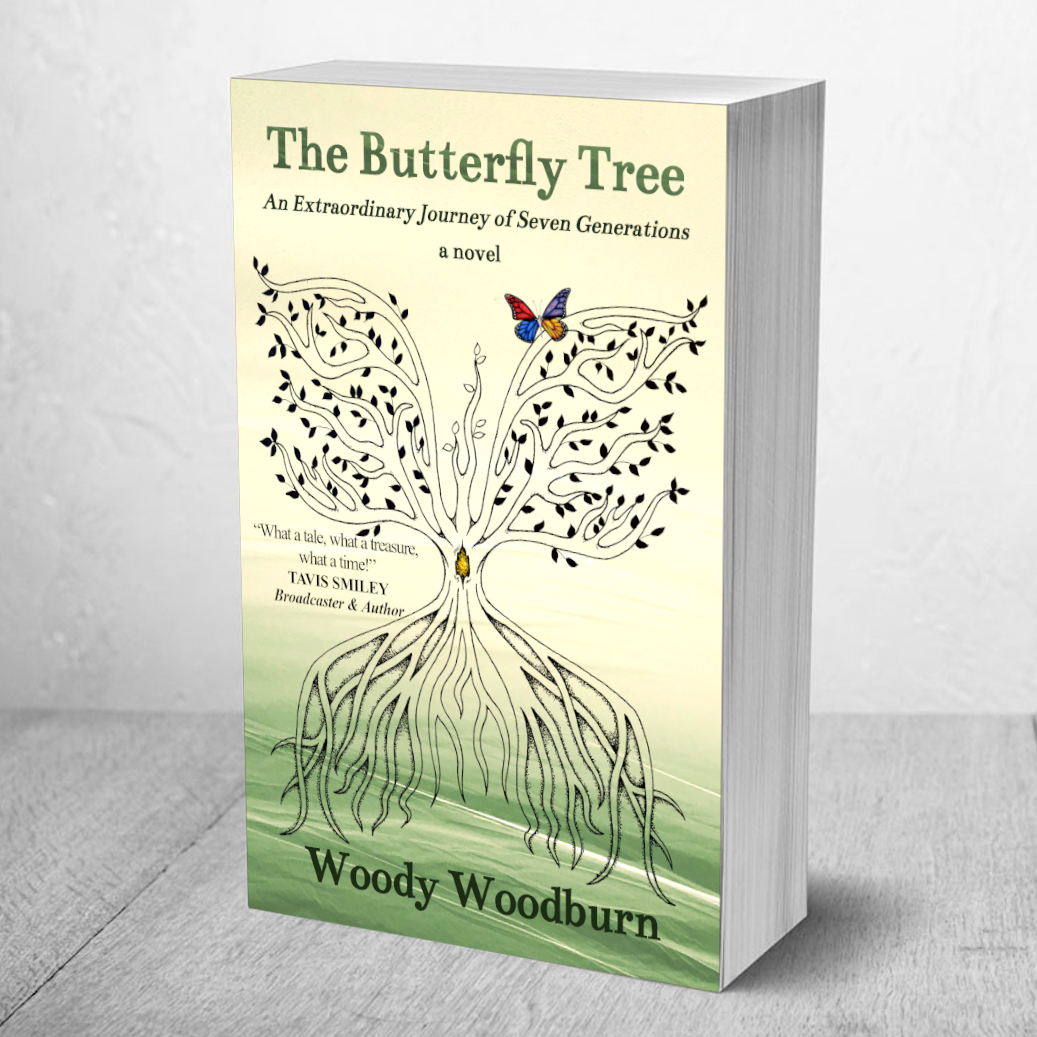
Woody’s new novel “The Butterfly Tree” is now available in paperback and eBook at Amazon (click here), other online bookstores, and is orderable at all bookshops.
*
Woody writes a weekly column for The Ventura County Star and can be contacted at WoodyWriter@gmail.com. Follow him on Twitter and Instagram at @woodywoodburn.