Feeling Home in Distant Land
This is the final of four columns in a series on my recent travels to Ireland.
* * *
In 1792, at age 14 – while claiming to be 18 in order to board a ship bound for America – James Dallas sailed out of Ireland’s Cork Harbor seeking a new life, likely never again to see his Old World loved ones.
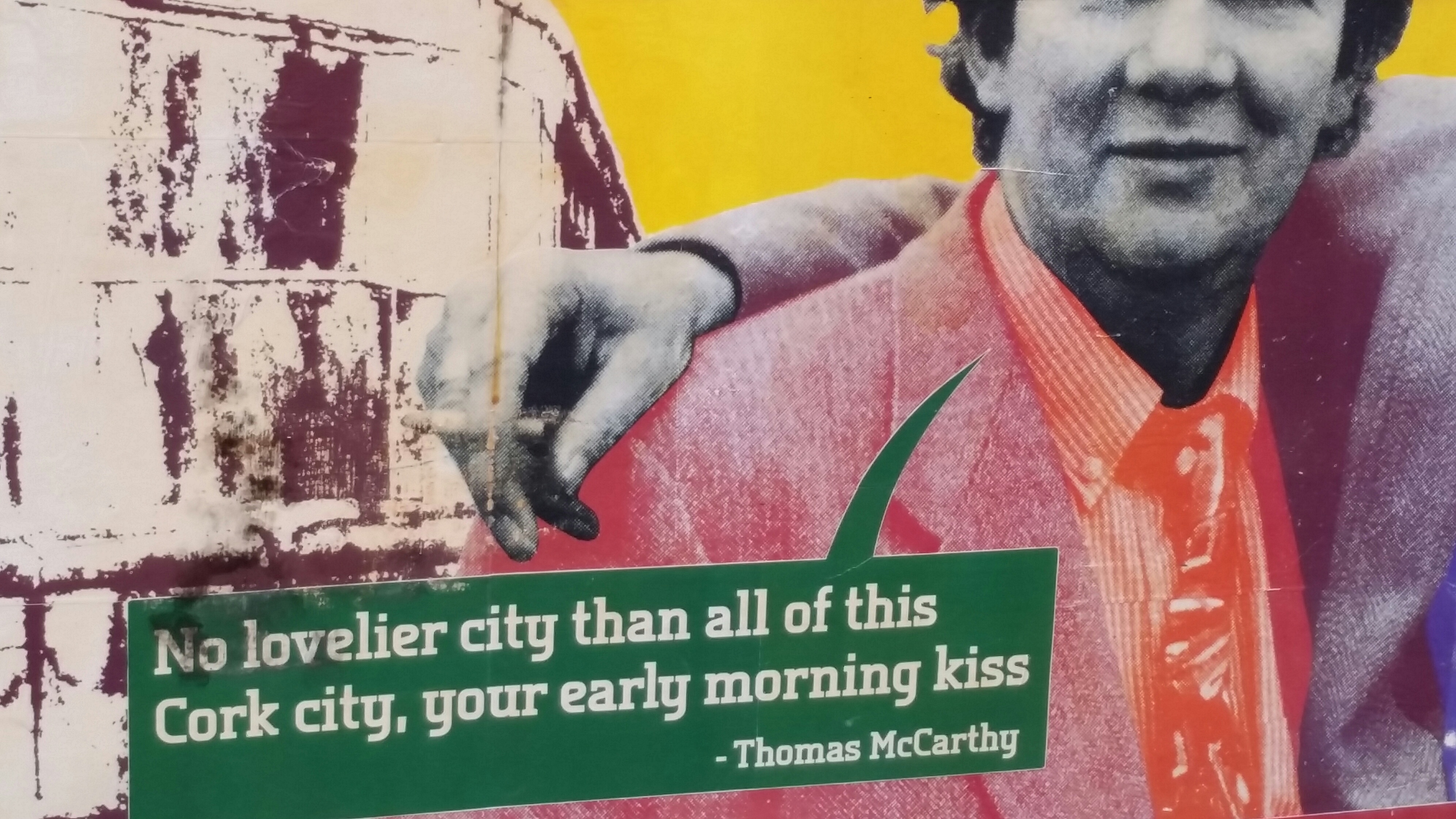
A billboard honoring poets in lovely downtown Cork.
Nearly two and a quarter centuries later, I marvel at my great-great-great-grandfather’s hardihood.
James Dallas is the earliest documented branch of my family tree. Visiting his homeland has long beckoned me.
My roots grow deep in the fertile soil near Ohio’s Mad River where James Dallas settled. The next four generations, beginning with my great-great-grandfather John Woodburn (who married James Dallas’ daughter), remained nearby until my dad moved our family to Ventura four decades ago.
Heritage is dear to me: my son’s middle name is Ansel, in honor of his great-grandfather; my daughter’s first name is Dallas. Thus, my summer fortnight in Ireland, and especially five days spent in ancestral County Cork, promised to be a trip for the ages.
Flying 12 hours to London and two more to Dublin, before taking a three-hour train ride to Cork seemed an arduous journey. Yet I could not help think how embarrassingly easy this was compared to weeks at sea in an 18th century ship.
In a movie, I would have arrived in Cork and taken a taxi to a farmhouse, knocked on the front door and been greeted with open arms by a distant blood relative. Real life, of course, is rarely so Hollywood.
For starters, where would I possibly knock?
When asked about the surname “Dallas,” tour guides, locals and even a historian in the Cork City Central Library did not recognize it as Irish. It was suggested the Gaelic name “Dalgash” might have been anglicized upon arrival to the New World.
On a nine-hour bus tour of bucolic southern Cork, our guide/professor Dan O’Brien spent an hour expounding on dairy farming. It was an invaluable lecture.
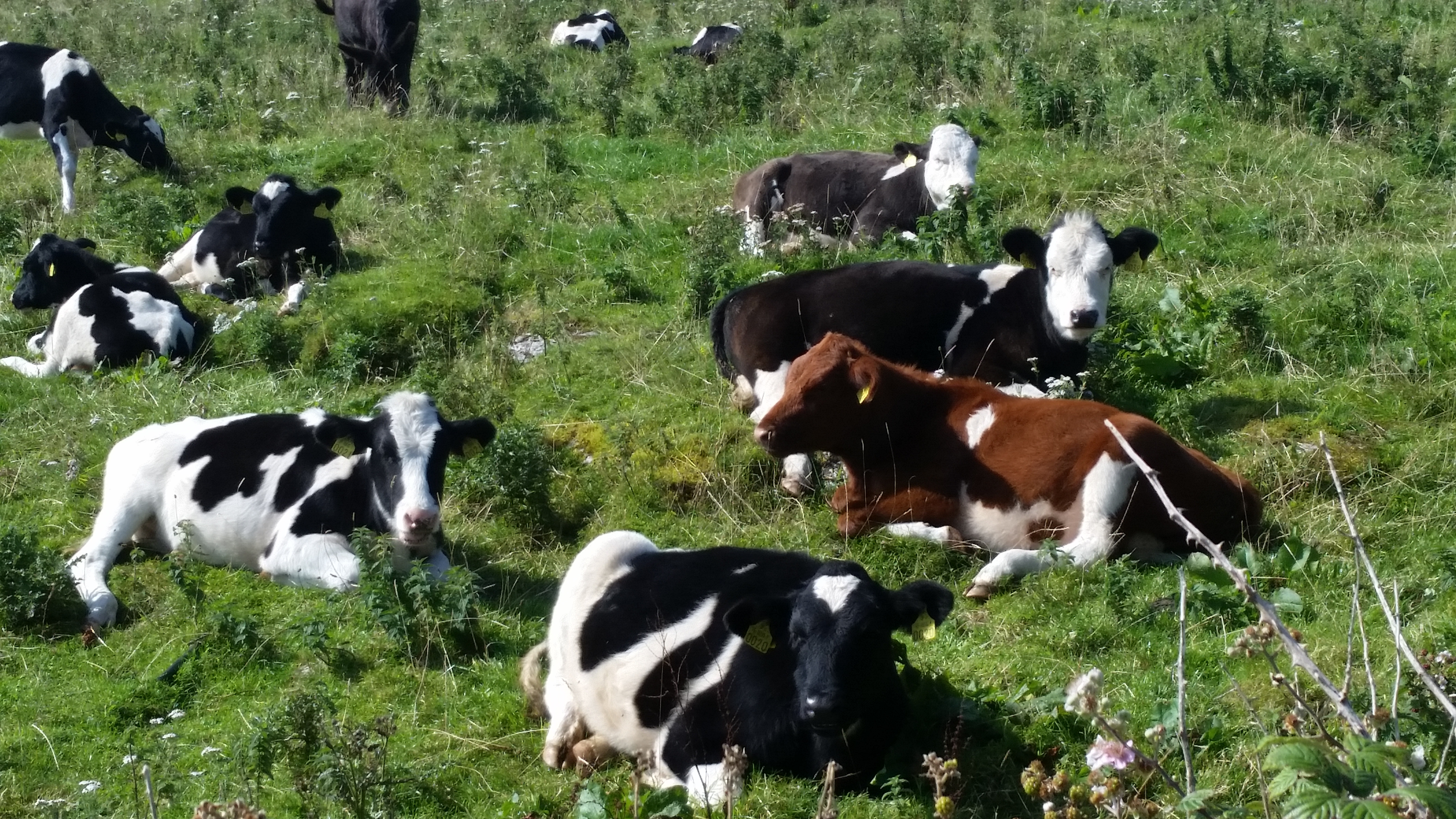
Dairy cows dot the County Cork landscape — and milk cans are common as well.
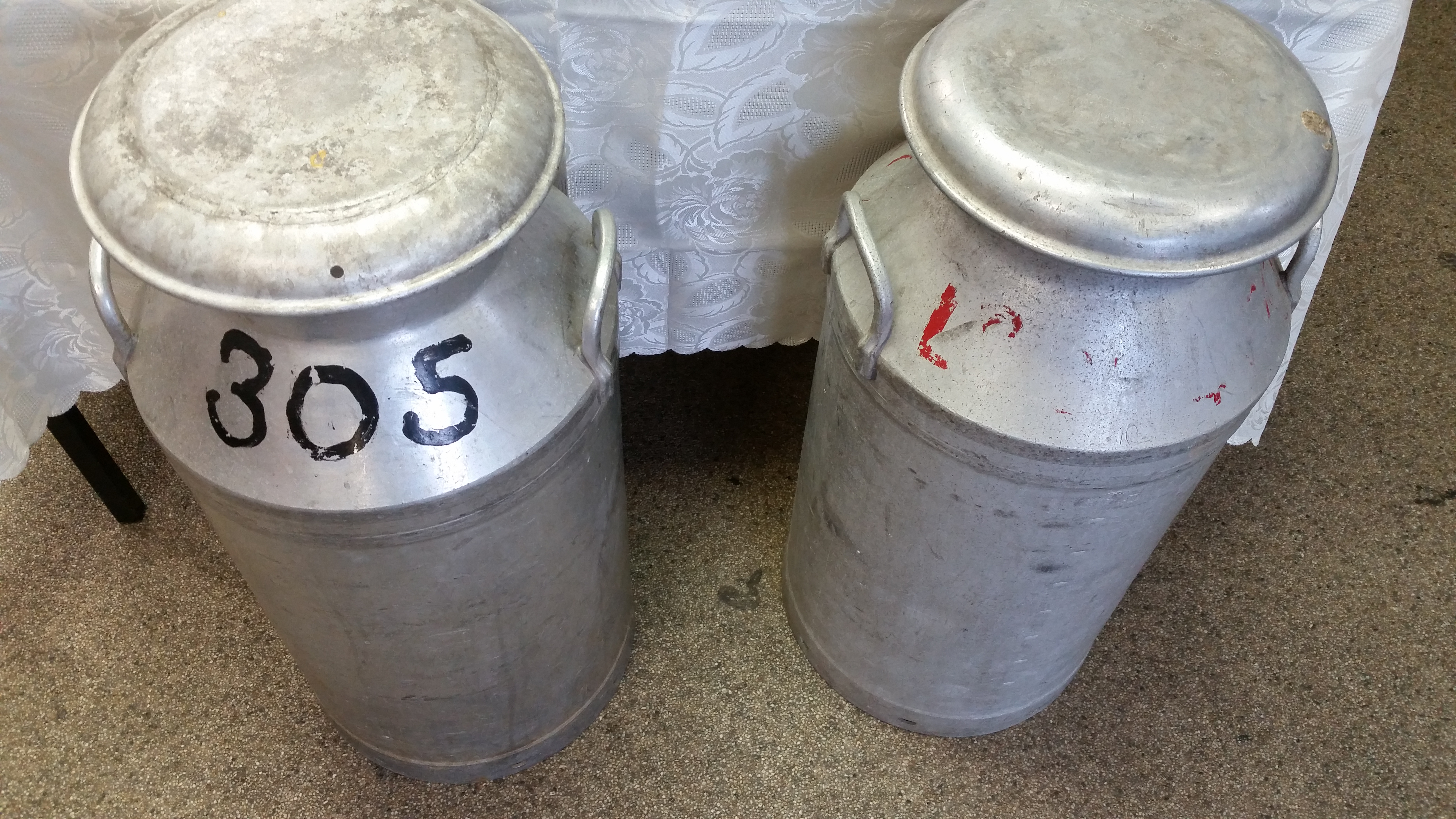
Importantly, I learned that dairy farming was “the jewel of the crown” in Cork in the 1700s and 1800s. In fact, Port of Cork was the world’s leading exporter of butter. So it makes perfect sense James Dallas was a dairy farmer.
Making sense of why he left Ireland may be answered by the question in this lyric from an old Irish folk song: “Was it poverty or the call of adventure?”
Likely, both. Three decades of economic difficulty preceded James Dallas’ emigration. Add to this a system of powerful landlords and hardscrabble tenant farmers, and perhaps as much as fleeing hardship James Dallas was running to adventure in America and the opportunity of land ownership.
Gazing out the tour bus window at farm after farm, cows after cows, mile after mile, I wondered if against all odds I was at one moment looking at James Dallas’ boyhood pasture. As Hemingway wrote in “The Sun Also Rises”: “Isn’t it pretty to think so?”
Two more pretty thoughts: strolling through historic English Market Cork it came easy imagining James Dallas once shopping here; visiting Guinness Brewery, established in 1759, I could not help but picture my forebearer, even at age 14, drinking a pint of the legendary black stout.
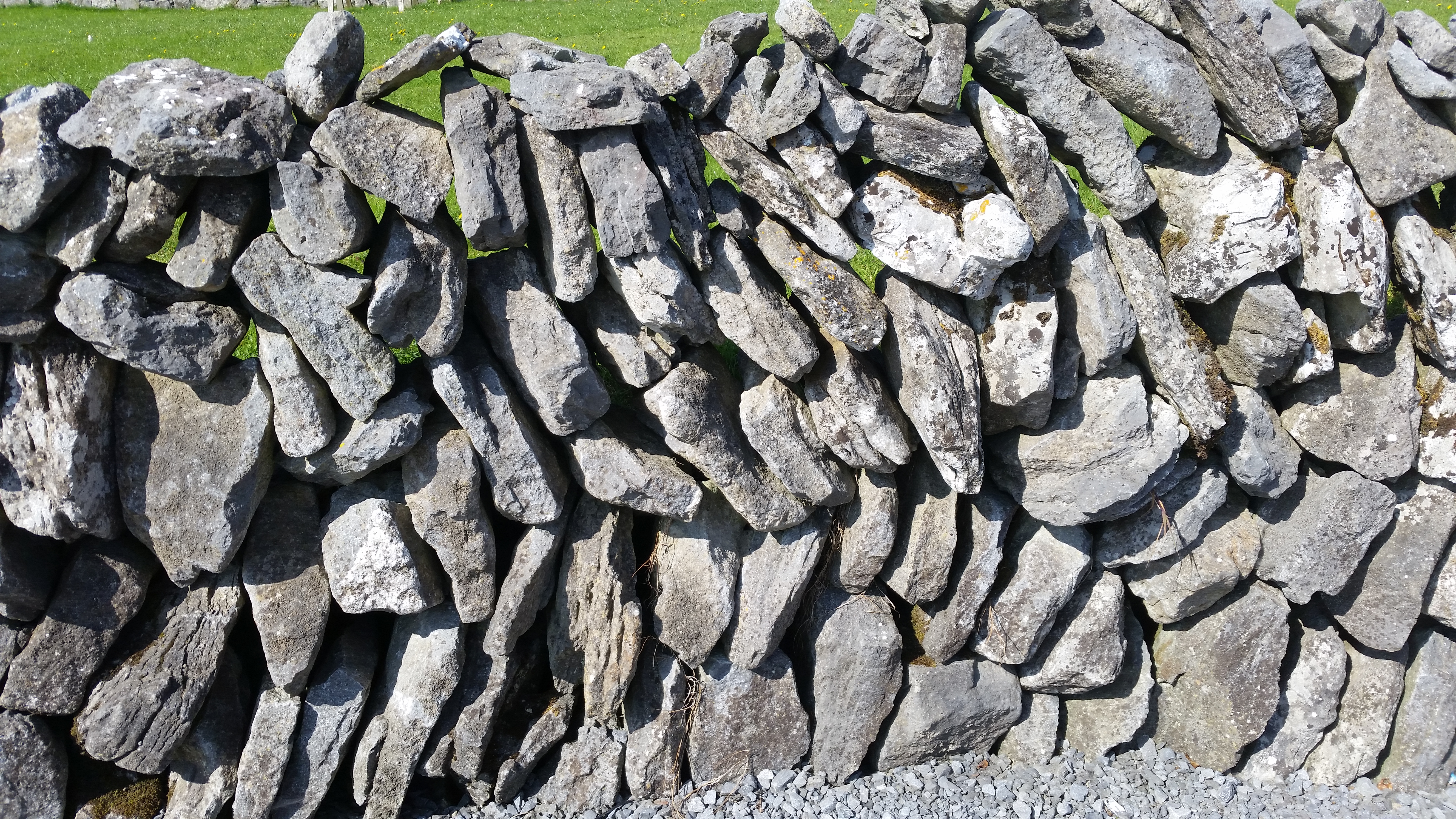
An example of a very old stone fence still standing despite no mortar.
One more prettiness: Hearing Irish accents and pronunciations, like the silent “h” in “th” – tirty, tousand, tirsty – I wondered if James Dallas carried the lilt of a leprechaun.
Prior to arriving in Ireland, James Dallas, born 182 years before I was, had seemed less a real person and more a painting faded a tousand years. But in the context of this ancient land where farmhouses are routinely a century old or more; stone fences built masterfully without mortar stand 300 years later; and castles date back half a millennium, time collapsed and I suddenly felt a closer connection.
Spiritually, I felt his presence.
The day I arrived in Cork a small sign above a house doorway caught my eye – and heart: “Welcome Home.” It brought to mind a poetic thought by Maya Angelou: “When you leave home, you take home with you.”
Traveling to Ireland, I felt this true. Returning to America, I felt it equally.
* * *
Woody Woodburn writes a weekly column for The Ventura County Star and can be contacted at WoodyWriter@gmail.com.
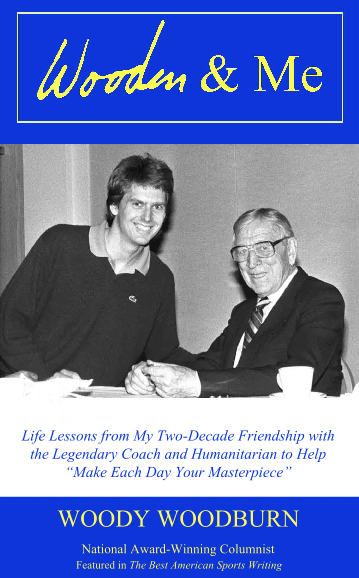 Check out my new memoir WOODEN & ME: Life Lessons from My Two-Decade Friendship with the Legendary Coach and Humanitarian to Help “Make Each Day Your Masterpiece”
- Personalized signed copies are available at WoodyWoodburn.com
- Unsigned paperbacks or Kindle ebook can be purchased here at Amazon