Column: Service Helps Others

Querrey Serves Up Big Highlight


A pre-Thanksgiving serving of leftovers from my notepad . . .

*

            If you had to choose a single word to describe Thousand Oaks native Sam Querrey “big” would be difficult to top.

For starters, the world’s No. 31-ranked tennis player stands 6 feet 6 inches tall.

His serve is also certainly big, having been clocked at 147 miles per hour. To give you further measure, James Blake once watched an ATP Tour-record 10 consecutive aces off of Sam’s racket strings fly past him.foodshare

            Indeed, Sam has a big game (he has been ranked as high as No. 17); a big trophy case (seven pro singles titles plus four in doubles); and a big bank account ($5 million in career prize winnings).

            Oh, yes, and a big heart.

            When Querrey learned about a wish by Thousand Oaks resident Kevin Feinbloom, who was recently diagnosed with Stage 4 esophageal cancer, the American Davis Cupper served up his services.

“He played and sat with us for two hours,” Feinbloom recalled, noting that his two children – Cole, 17, and Julia, 14 – also got to hit balls with the tennis idol. “It was the coolest thing ever.”

Actually, something even cooler happened. During that magical afternoon on the court Feinbloom was hit with a new dream: to put on a fundraiser to help send Ventura County children to Andrea Jaeger’s remarkable Little Star Foundation camp in Colorado that specially serves kids who are battling cancer.

“After a few days of my head spinning around and thinking how I can’t believe what the hell I’m going through, I figured that instead of sitting back and letting it kick my butt, I’d better do something,” Feinbloom explained.

And so was born the “Fans In The Stands Foundation Tennis Festival” this Sunday (Nov. 24) at North Ranch Country Club in Thousand Oaks from 11 a.m. to 4:30 p.m. (Ticket information: www.FansInTheStands.org)

Querrey not only volunteered to take part in the worthwhile event that includes a youth clinic, he recruited former USC Trojan and two-time NCAA singles champion Steve Johnson to play in an exhibition.

Jaeger, who at age 16 was ranked No. 2 in the world, will also be on hand.

“(Feinbloom’s) story and wanting to do something like this really touched me,” Jaeger told former VC Star tennis writer Steve Pratt. “When I first saw his email, I just sat down and said ‘wow.’ I mean, the father has been diagnosed with Stage 4, the same year his wife has had breast cancer treatments, and they have children.

“Kevin is determined to make a difference.”

*

Speaking of making a difference, for every $1 donated to FOOD Share (www.foodshare.com) it will provide over $5 worth of food for families in Ventura County – especially priceless during the coming holiday season.

*

Another local difference-maker is the Ventura County Community Foundation that will give away $1.2 million via 455 scholarships for the 2014-15 school year. For application information visit www.vccf.org.

*

            On the topic of academics, it was reported that of the more than 104,000 students who this year took the Advanced Placement Calculus exam worldwide in 59 countries, only 11 earned a perfect score.

            All 11 pefectos are from the United States. With all the derision directed at our educational system, this is definitely worth bragging about.

*

            Another news story this week: “Analysis of studies on millions of children around the world finds they don’t run as fast or as far as their parents did when they were young. On average, it takes children 90 seconds longer to run a mile than their counterparts did 30 years ago.”

            Meanwhile, for some kids a bigger challenge is trying to run as fast as their parents do NOW. For example, the offspring of a quintet of Ventura County sheriff’s deputies – Randy Pentis, Tim Hagel, Paul Higgason, Dave Kenney and Frank Underlin – who earlier this month completed the Bagan Temple Marathon in conditions (102 degrees and 90 percent humidity) more suitable for basting a turkey than running 26.2 miles.

            Pity the crook of any age who tries to escape one of them on foot.

*

Woody Woodburn writes a weekly column for the Star and can be contacted at WoodyWriter@gmail.com. His new memoir WOODEN & ME is available at www.WoodyWoodburn.com and Amazon.com.

Column: A Grandma’s Wisdom

Granddaughter Discovers a New Hero


When the phone call came a few months back offering a Steinbeck Fellowship in Creative Writing at San Jose State University, my 26-year-old daughter was thrilled at the academic opportunity, financial support to work on a novel, and the honor of being associated in some small way with one of her literary heroes.DalAndGMa


Little did she know that the real prize would be in discovering a new hero in a person she has long known though only through short visits. I will now let Dallas take over . . .


* * *


I’ve been living with my maternal grandparents in the Bay Area for almost three months now. Daily life with these two full-of-life octogenarians has been a true gift. My grandparents are insightful, intelligent, kind, hardworking and often hilarious. And their love for each other warms my spirit.


I have especially learned a great deal from watching and listening to Grandma. Here is a woman who grew up during the Great Depression and World War II, and learned from her mother how to live with the utmost frugality.


She later graduated from college and earned a Master’s degree (when this was far more rare for women) and then worked full-time as a teacher while raising four children – often largely by herself, as Grandpap traveled greatly for his job.


Grandma is the matriarch of our family, always going out of her way to see that her children and grandchildren are happy and well fed and comfortable.


She also talks each and every day to her sister, who lives near Pittsburgh where they grew up as kids; interacts with a wide network of friends; and volunteers through various organizations. Grandma is a vibrant role model.


I’m so proud of the woman Grandma is – and proud to be her granddaughter. Here are some lessons, small and large, that I’ve learned from living with her these past few months.


Show Your Love. My grandma isn’t one to say “I love you” all that often. She says she can’t really remember her parents ever telling her they loved her, but she always knew they did because of their loving actions. Grandma is continually doing kind things for the people she cares about. Indeed, her caring gestures say “I love you” every day.


Always Bring a Jacket. It can be sunny out, but you never know when the weather is going to turn for the worse.


Always Bring a Snack. You don’t want to be hungry. Stick a granola bar in your purse, at the very least.


Be Early. My grandma is nearly always the first person at the movie theater, picking the best seat in the house. Like Goldilocks, often she’ll change her mind two or three times before settling on the seat she thinks is just right.


The Freezer is Your Friend. Grandma firmly believes in “waste not, want not.” All leftovers are refrigerated unless she thinks we won’t eat them right away, in which case into the freezer they go. Casseroles, lasagna, bread, cookies, pies – everything can be frozen and resurrected later. The woman wastes nothing. It’s amazing.


Soup is Super. If you don’t know what to cook for dinner, raid the fridge and make soup. You can’t go wrong with a pot of chicken stock and diced veggies.


Walk Daily. Every morning, even when her arthritic hip is acting up, Grandma puts on her tennis shoes and goes for a walk around the neighborhood. She also believes in exercising early before the craziness of the day sets in.


Escape The Indoors. If the sun is shining and the breeze isn’t too cold, Grandma finds time to enjoy the fresh air in a lounge chair on the patio; reading, talking on the phone, maybe enjoying an afternoon nap.


Forgive “Yo-Yo Heads.” My grandma’s favorite term for someone who disappoints is a “yo-yo head.” According to her, we are all yo-yo heads sometimes. So be patient with each other.


I enjoyed reading “Travels With Charley” but I am really loving “Living With Grandma (and Grandpap).”


*


Woody Woodburn writes a weekly column for the Star and can be contacted at WoodyWriter@gmail.com. His new memoir WOODEN & ME is available at www.WoodyWoodburn.com and Amazon.com.


Column: John McDougal, Bibliophile

BannerBooksJohn Barnes & Nobles’ Resident Bibliophile


While American workers play musical swivel chairs, plopping into a new job every 4.4 years on average according to the Bureau of Labor Statistics, John McDougal has marched around and around as the workplace Muzak has changed from Madonna to Sheryl Crow to Alicia Keys to Taylor Swift.


Earlier this year McDougal celebrated his 30th anniversary at Barnes & Noble Booksellers. The Ventura store even has a banner on proud display recognizing the rare feat.

Talking books and writers over a beer with John McDougal is a real treat.

Talking books and writers over a beer with John McDougal is a real treat.

McDougal has seen the bookstore landscape change greatly over the past three decades. For starters, Barnes & Noble was still B. Dalton’s when he began working at its small store in the old Esplanade Mall in Oxnard.


He next worked at the single-story Barnes & Noble in Ventura at Main Street and Telephone Road and a decade ago was part of the lock-stock-and-books relocation into a grand new two-story B&N where the old 101 Drive-In theater used to be.


“A lot has changed,” McDougal reminisces. “I remember when we used carbon copies for orders. We looked up books on microfiche – and we still couldn’t tell you if we actually had it. But it was a small store, so we kind of knew.”


Today’s store is a much larger with countless more titles, but McDougal still usually knows if a book is in stock without checking the modern computer system; where it is located; and what’s inside the cover.


For good reason here is how one fellow employee introduces him to customers seeking a reading recommendation: “This is Mr. McDougal and he knows every book in the world.”


John McDougal, born and raised in Oxnard, says he was a “library kid” and to this day reads more than a book a week. Asked for some of his Hall of Fame reads, he replied: “One of my all-time favorites is T.H. White’s The Once And Ancient Future King. I re-read The Wind in the Willows by Kenneth Grahame again and again. Little Big Man by Thomas Berger. Steinbeck, of course. Norman Maclean’s A River Runs Through It . . . .”


He was just getting started.


John McDougal is 56 years old with a boyish mop of curls – albeit now salt-and-peppered with a matching goatee – that defies gravity. Add in round wire-rim glasses and he brings to mind a wise and kindly college professor.


The 8-year-old library kid is now an adult bibliophile as evidenced by the three glass bookcases in the front room of his home, each filled with “my treasures” as he calls his rare collection.


While he loves old-fashioned bound books, McDougal is a growing fan of e-readers because they allow him to find out-of-print titles he has been searching decades for in used bookstores.


“Not everyone likes to read what I do,” McDougal allows. “Everyone has different tastes. Some people want to read what’s popular right now; others are open to wider suggestions.


“I ask questions and then do my best,” he continues of his magic formula for recommending books. “It’s pretty gratifying to have someone come back and say, ‘Thanks! That was great! What should I read next?’ ”


A new question McDougal hears, prodded by the anniversary banner, is: “When are you going to retire?”


“Maybe in another 30 years,” he answers. “I’m having too much fun.”


In honor of his loyalty and longevity, McDougal is being given a celebratory trip anywhere in the world. He plans to take his wife LoRena to London, which will bring this tale full circle.


You see, while McDougal’s official bookstore anniversary is Feb. 22, 1983, he actually worked at B. Dalton’s for two years following graduation from UC Santa Barbara in 1979. After saving some money, he quit and packed his backpack for Europe.


“I wanted to travel before going on to the next stage in my life,” he recalls of the 13-month odyessy that followed. He eventually rushed home when his girlfriend informed him she had met another guy.


“It had a happy ending,” McDougal says, smiling because that girlfriend became his wife. This time LoRena will be at his side flying across the Atlantic – no doubt with a carry-on book that comes expertly recommended.


*


Woody Woodburn writes a weekly column for the Star and can be contacted at WoodyWriter@gmail.com. His new memoir WOODEN & ME is available at www.WoodyWoodburn.com and Amazon.com.


WOODEN & ME chapter excerpt: Bryans Brothers “Help Others”

.

Chapter Nineteen

.

Bryan Brothers Strive To “Help Others”

.

* * *

.

Coach John Wooden put into daily practice his belief that “you can’t live a perfect day without doing something for someone who will never be able to repay you.

.

          Two small examples: he graciously signed autographs even when the request interrupted his meal, and he paid for the stamps himself to mail back items sent to him to be autographed that did not include return postage.BryanBros


Coach’s deeds and words have greatly inspired both my children ever since they were quite young. A dozen years ago Dallas, now 26, created “Write On! For Literacy” (writeonbooks.org), a nonprofit foundation to encourage kids to read and write. She has also held an annual Write On! Holiday Book Drive that has collected and donated more than twelve-thousand new books to disadvantaged youth.


At age sixteen Greg, now 23, similarly created his own nonprofit organization “Give Running” (giverunning.org) and since 2006 he has collected more than 14,000 pairs of running and athletic shoes, thousands of which he has personally washed by hand. These shoes have been sent to youth living in impoverished villages in numerous developing countries as well as to inner-city communities across the United States.


In addition to being deeply inspired to help others by Coach Wooden, Dallas and Greg have been blessed to have Mike and Bob Bryan – the winningest doubles tandem in tennis history – as key role models in their lives. Coach Wooden was a fan of Mike and Bob, for their sportsmanship as well as their athletic skills, he told me when I asked him to sign a Pyramid of Success as a gift for them.


Because the identical twins remember the childhood thrills they felt when getting autographs from their tennis heroes, Mike and Bob try to return the favor to today’s young fans. It is not unusual for them to spend half an hour or more after a match or a practice session signing autographs courtside.


“We feel it’s important to make time for fans,” says Mike.


Adds Bob: “It only takes a moment to make a kid smile, so why not take the time and make the effort to maybe make a small difference?”


How Wooden-like does that sound?


Mike and Bob’s time and effort often make more than a small difference. Through their nonprofit organization The Bryan Bros. Foundation they have supplied rackets to inner-city high school tennis teams; supported youth tennis leagues; sponsored young players with equipment and travel expenses; and in countless other ways succeeded in their mission to “help at-risk survive and thrive.” Too, Mike and Bob have generously supported Write On! and Give Running.


But perhaps never have Mike and Bob stood taller than when they made time for Shigeki Sumitani, a ten-year-old from Japan. When he emailed the Bryan Brothers asking for an autograph, they happily obliged.


A few weeks later, upon first learning that Shigeki was battling cancer, Mike and Bob solemnly signed a tennis ball and cap and also mailed the small boy one of the shirts they wore while winning their first Grand Slam championship at the French Open.


When they next learned that Shigeki’s father had bought autographed, match-used rackets of his son’s two other favorite players – Andy Roddick and Andre Agassi – on eBay, only to receive two unsigned knockoff rackets, Mike and Bob autographed one of the rackets they had just used in the French Open final and sent it by FedEx to him.


A small thing? Perhaps. But not to Shigeki. To him it made far more than a small difference. To him it meant the world. As Coach Wooden observed: “Sometimes the smallest gestures make the biggest difference.”


Shigeki passed away only a few days after that priority package arrived. He was wearing the championship shirt from the French Open, with the racket from that same match at his side, while listening to the “Five-Setter” music CD the Bryan Brothers Band had recently produced.


These kind gestures provided a little happiness when happiness had long before been chased away. Shigeki’s mother died at age thirty of a heart attack when her son was six years old, soon followed by his cancer diagnosis that very year. The cancer grew worse and worse. So did the pain.


“At the end, he knew his time was short,” said the elder Sumitani. “His treatments were very hard on him. Frequently he had attacks of severe pain. Sometimes he couldn’t sleep. Sometimes he made complaints. But he did his best.”


So did the Bryans. They sent Shigeki autographs and shoes and CDs and emails. Most importantly, they sent him the knowledge that they cared. Indeed, Bob and Mike embodied the Wooden-like words that their mother Kathy, a former professional tennis star herself, has preached to them since childhood: “It’s far more important who you are as person than who you are as an athlete.”


An only child, Shigeki used to tell his father he dearly wished he had a brother. Briefly, he got the next best thing: two long-distance surrogate big brothers. “Having the Bryans as his ‘older brothers’ made him happy,” the boy’s father confided to me.


Under much happier conditions, Mike and Bob have similarly been surrogate big brothers to Dallas and Greg, showing them endless support over the years. Many times when Greg needed it most – when stress fractures derailed his running on three different occasions or when he was a Rhodes Scholar Finalist but learned the ultimate opportunity to study abroad had eluded him – Mike and Bob have sent emails of encouragement. They have done the same during Dallas’s own tough times.


Conversely, in recognition of Dallas’ high points – her successful ascent of Mount Whitney; acceptance into college and graduate school; receiving the 2013-14 John Steinbeck Fellowship – Mike and Bob sent congratulatory flowers and text messages. Greg, too, has experienced the thrill of their kind gestures.


Dallas and Greg have emulated their big-brother role models by making small gestures to Mike and Bob in return. When the twins are home during a rare break from the pro tour, Dallas likes to bake “Friendship Bread” for them. And Greg has helped do their laundry. Wayne Bryan still happily recalls the time when this was not such a small thing after his twin sons had returned from a three-month clay-court season in Europe: “Greg and I did a world-record thirteen loads of wash, drying, and folding at the local Camarillo Coin Op Laundry. It took us some two and a half hours. We really chopped some wood. He had a smile on his face the whole time and we shared some laughs and he did a beautiful job and it was a day I’ll never forget.”


Greg feels the same way. There truly is great joy – and great memories created – in helping others.

 .

*

 .

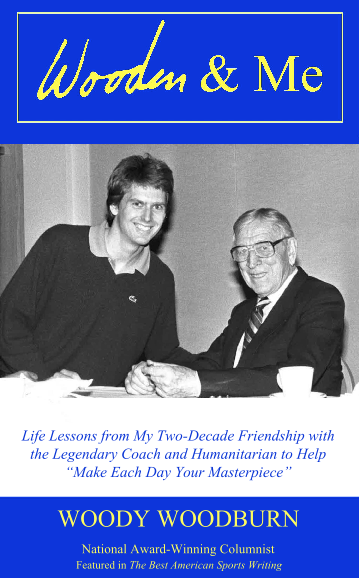
Wooden-&-Me-cover-mock-upExcerpted from WOODEN & ME: Life Lessons from My Two-Decade Friendship with the Legendary Coach and Humanitarian to Help “Make Each Day Your Masterpiece”

Order Today!

For a signed copy:

Name to sign inscription to:


For an unsigned copy from Amazon CLICK HERE

.

Columns: Teachers Speak Out

Some Teachers at End of Their Rope


“You never really understand a person until you consider things from his point of view,” Atticus Finch wisely says in the great novel To Kill a Mockingbird. “. . . until you climb into his skin and walk around in it.”
            A handful of emails from local teachers allowed me to climb into their skin and walk around in it – and better understand why a growing number feel at the end of their rope.


To begin, consider this actual classroom exchange one local high school teacher, who I’ll call “Ms. C” to respect her privacy, recounted:Apple1


Student: ‘Ms. C, Do you allow make up tests? I didn’t read the book.’


“(Keep in mind that we read the first two chapters together. They had to read one chapter on their own – 12 pages.)


Me: ‘Um, no. In the future I suggest you do the reading.’


Student: ‘Wow. That’s harsh.’
Really? *sigh*”


*


            My recent column about the mini-documentary “Black Out”, which focuses on the great lengths students in Guinea go to in order to study under public lights at gas stations and parking lots because they do not have electricity at home, brought a number of sighs from teachers who wished they saw more of this attitude in their classrooms.


            “Powerful column today,” wrote S.K. “I especially applaud the paragraph which reads, ‘More simply, I wish every classroom in America would require its students – and parents – . . .’


“Including parents is huge! My 30-something niece called me this morning. She told of her daughter, my grandniece, in the fifth grade, not performing well on a test. My niece and her husband – who is a Special Education teacher – contacted the teacher to see what they could do to help. I applauded their pro-active stance and willingness to play an active role in their daughter’s education.


“If more parents were pro-active in the education of their children, if more parents placed more value on education, perhaps we would not see our test scores declining.”


*


From S.Z., this heavy sigh:


My daughter is a math teacher at (area high school) and the excuses she gets are as stupid as ‘the dog ate . . .’ Or no excuse and no homework assignment done either.


“Parents often aren’t much better. They don’t require their kids to even go to school, much less attend class, and wonder why their little darling is failing which, by the way, is now not allowed – no more failing kids.


“The same was true when I taught. A kid in English – ninth through 12th grades – would come to school every day with no homework. He took no tests; just sat there. At 18 he was sent on his way functionally illiterate.”


*


And this from J.G.:


I retired from Ventura Unified after 36 years of public school teaching. Due to something beyond our control I’m back doing some sub work at a couple of schools.


“I have always enjoyed being with kids so for the most part find it enjoyable even at my age. But boy have things changed. The kids (not all be any stretch of the imagination, but enough) are very hard to handle, are unresponsive, and downright disrespectful.


“There’s plenty of blame to go around, but from my vantage point I believe parents have done their kids a disservice by indulging them in so many things. Middle school kids carry iPhones, have plenty of money, wear a new $40 baseball cap every other week, etc. I really believe that we have hurt our kids.


“I think your column got my attention also because part of our family is living, studying, and teaching in Kenya at this time. Their dad, our middle son, was serving in missions in Africa when he contacted encephalitisand perished last February. They feel out of place in the U.S. and prefer living among people who don’t have everything.


My hat is off to the kids you described . . . ”


*


            Indeed, hats off to kids who study – and also to their parents who demand it and teachers who inspire it. 


*


Woody Woodburn writes a weekly column for the Star and can be contacted at WoodyWriter@gmail.com. His new memoir WOODEN & ME is available at www.WoodyWoodburn.com and Amazon.com.


Column: Zoey’s will be missed

Zoey’s – Those Were The Good Old Nights


Frank Sinatra’s 1973 song “There Used to Be a Ballpark Right Here” came melancholically to mind when the 101 Drive-In theater was demolished in 2001 and again when the Cabrillo Racquet Club permanently took down its tennis nets in the winter of 2007.


In the summer of 2008 it was the treasured indie bookstore Adventures For Kids that was lost, reminding me of Carly Simon’s 1971 hit “Anticipation” because when I took my two children to A4K (as loyal patrons called it) I knew “these are the good old days” that couldn’t last.Zoeys


Now another local touchstone has been lost. Zoey’s Cafe, a magical music mecca, killed its mics for good last Saturday. Another song from the early 1970s, “America Pie” by Don McLean, fits the moment beginning with the very second line: “I can still remember how that music used to make me smile.”


The music at Zoey’s made me, and countless others since Steve and Polly Hoganson bought it seven years ago, smile. The names of the musicians I saw there – mostly at the original location on Ventura’s Main Street with its upstairs “listening room” that was as intimate as a home den – escape me, but I remember this: those “good old days” in cozy Zoey’s were as magical as big-name concerts I have seen in the Hollywood Bowl.


A sample of this homey magic from my 26-year-old daughter: “I saw many wonderful singers at Zoey’s – most recently my friend from high school, Lauren Sexton, who came out with her debut CD ‘Home by Morning.’ And when I was going to Purdue in Indiana, I remember being homesick and feeling so happy and comforted when I saw ‘Zoey’s, Ventura, CA’ listed on Tony Luca’s concert T-shirt as a stop on his tour!”


In honor of Zoey’s and in thanks to the Hogansons – and also as a reminder of how important it is for each of us to frequent and support locally owned-and-run businesses – here is a “mash-up” created with lyrics from “Anticipation” (Simon), “America Pie” (McLean) and “There Used to Be a Ballpark Right Here” (Sinatra).

* * *

I can still remember how that music used to make me smile (McLean)


And the air was such a wonder (Sinatra)


And, I knew if I had my chance that I could make those people dance (McLean)


And maybe they’d be happy for a while (McLean)


And the people watched in wonder (Sinatra)


And, there we were, all in one place (McLean)


With a joy I’d never seen. (Sinatra)


How they’d laugh and how they’d cheer (Sinatra)


Them good ol’ boys were drinking whiskey and rye, singing (McLean)


And tomorrow we might not be together (Simon)


Man, I dig those rhythm and blues (McLean)


’cause these are the good old days (Simon)


Can you teach me how to dance real slow? (McLean)


I rehearsed those lines just late last night (Simon)


Can music save your mortal soul? (McLean)


I met a girl who sang the Blues (McLean)


These are the good old days (Simon)


Now, do you believe in Rock and Roll? (McLean)


We can never know about the days to come (Simon)


But we think about them anyway, yay (Simon)


We all got up to dance, oh, but we never got the chance  (McLean)


I knew I was out of luck the day the music died  (McLean)


I went down to the sacred store (McLean)


Now the children try to find it (Sinatra)


Where I’d heard the music years before, but (McLean)


The man there said the music wouldn’t play (McLean)


And the sky has got so cloudy (Sinatra)


When it used to be so clear (Sinatra)


And the summer went so quickly this year (Sinatra)


And, in the streets (McLean)


We (Simon)


Cried (McLean)


On (McLean)


The coast the day the music died (McLean)


Yes, there used to be (Sinatra)


Lovers (McLean)


And poets (McLean)


Right here (Sinatra)


Bad news on the doorstep (McLean)


Something touched me deep inside the day the music died (McLean)


So, bye bye (McLean)


Z (Sinatra) O (Simon ) EY (McLean ) ’S (McLean).


*


Woody Woodburn writes a weekly column for the Ventura County Star and can be contacted at WoodyWriter@gmail.com. His new memoir WOODEN & ME is available at www.WoodyWoodburn.com and Amazon.com.


Column: Enlightened Darkness

Shining Example Amid Darkness


Hearing my 23-year-old son talk about seeing kids in Ghana who walk three miles to and from school, and they consider it a privilege because there are some years when their village cannot afford to hire a teacher, shines a new light on education.


From another Third World trip, to Mali, my son tells of village children cut off from attending secondary school for four months each winter because a river with no adequate bridge floods during the rainy season.DarkBooks


            And so every time I see a new report with same old news that the United States is slipping down the educational ladder – ranking 17th according to a global report by the education firm Pearson – it angers me. Any excuse offered for this dismal showing is as lame as a fourth-grader claiming, “My dog ate my homework.”


            I wish every American youth could travel to Ghana or Mali or someplace similar and witness first-hand how kids there value the opportunity to attend school.


            More simply, I wish every classroom in America would require its students – and parents – to watch a three-minute documentary by award-winning filmmaker Eva Weber titled “Black Out.” (You can see it online at http://www.one.org/us/2013/10/08/the-dark-side-of-education/).


            Imagine countless Rocky Balboas with a tattered textbooks and you get a feel for “Black Out.” It should make every American student embarrassed to not finish a homework assignment or fail to study for an exam.


            The powerful video opens with this somber statistic: “Only a fifth of Guinea’s 10 million people have access to electricity” followed by this dark reality: “Every day during exam season, as the sun sets, hundreds of school children begin a nightly pilgrimage to find light.”


            Onscreen on a dark, lonely night we see a teenage boy, wearing a backpack, sitting next to a gas pump and studying under the outdoor lights overhead.


 “We don’t know what to do,” the boy says, his words translated into English. “We don’t have electricity at home. We have to go outside where the electricity is working. We study out here and then go back home.”


A handful more students turn the gas station into a library al fresco. One boy uses a trashcan as his desk and a girl speaks this cold truth: “I come from far away to study here. Sometimes I have to spend the night here. As a woman it can be dangerous to go back around 11 p.m. Sometimes were are forced to spend the night here because of the lack of electricity.”


One recent evening shortly after first seeing this video, I saw a girl of similar age reading a textbook at a local soccer practice. As dusk arrived she did not move to beneath a light at the restrooms or in the parking lot. There was no need; there will be illumination at home later. She pulled out a video game.


The kids in “Black Out” have no lamps, no desks, no chairs. They balance schoolbooks on their knees and on trashcans; they sit on curbs and on the ground.


Two minutes into the mini-documentary comes the most chilling, and yet the most inspiring, footage of all. Outside the international airport is a large parking lot. The lined spaces are empty of cars, but the lot is not at all vacant – the blacktop is filled with kids reading, doing math problems, studying.


            A boy in the parking lot explains the young human gridlock: “We all come here because we don’t want to fail our final exams.”


Jets arrive and depart, but the kids stay through the night.


Another boy with no electricity at home adds this: “My parents are a little bit worried. We are worried, too. We want a different future. That’s why we come here.”


They come by the hundreds. Beneath the glow of streetlights meant to prevent crime, crime is being prevented in the best way possible – with education for brighter futures.


“Black Out” then fades to black, but its message is enlightening. Every American kid who offers an excuse for not doing his or her homework should be forced to study in a supermarket parking lot for a week.


*

Woody Woodburn writes a weekly column for the Star and can be contacted at WoodyWriter@gmail.com. His new memoir WOODEN & ME is available at www.WoodyWoodburn.com and Amazon.com.


Column: Wooden and Friendship

Wooden Made Friendship a Fine Art


Monday – October 14 – would have been John Wooden’s 103rd birthday. Below, excerpted from my new memoir Wooden & Me: Life Lessons from My Two-Decade Friendship with the Legendary Coach and Humanitarian to Help “Make Each Day Your Masterpiece” (signed copies available at WoodyWoodburn.com and unsigned paperbacks at Amazon.com), is an example of how he walked his talk.


* * *


The next time I joined Coach John Wooden for a brisk morning walk, I did something I embarrassingly neglected to do in all my excitement the first time: I brought a gift of thanks for his hospitality.


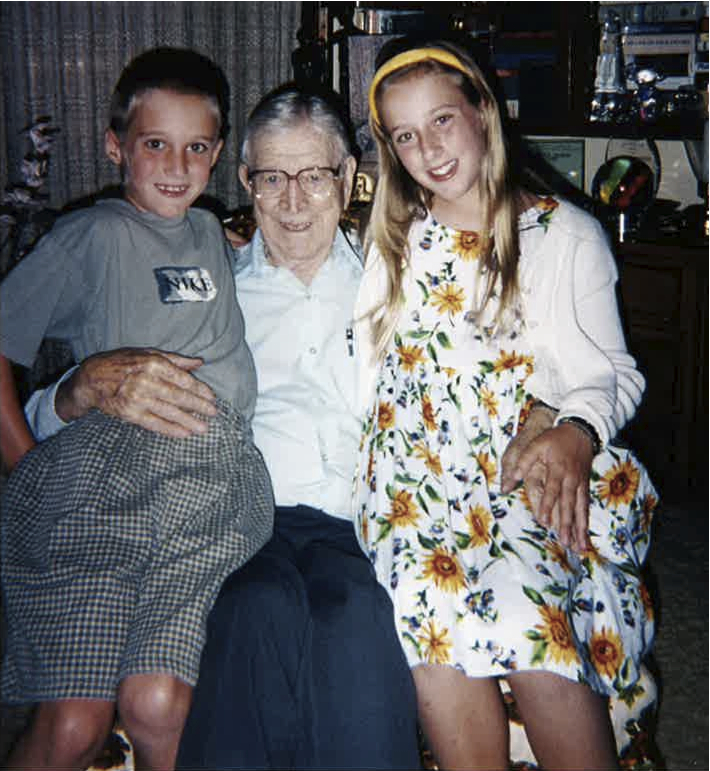
Coach with two very happy young visitors in his home: my son Greg and daughter Dallas.


Coach thanked me for the book while insisting a gift was completely unnecessary. Shortly thereafter I received a handwritten thank-you note; included within was a postcard-sized printed poem authored by Wooden titled “On Friendship”:


At times when I am feeling low, / I hear from a friend and then


My worries start to go away / And I am on the mend


No matter what the doctors say – /And their studies never end


The best cure of all, when spirits fall, / Is a kind word from a friend


More prized than the signed poem is that over the ensuing years Coach would turn the words into deed when my spirits fell – particularly when my mom passed away in 1992 and when I was severely injured by a speeding drunk driver in 2003.


Even when my spirits were already high, Coach had a gift for raising them further. For example, when I next visited him he recited a poem from the Rumi volume I had given him. I must confess I did not know whom Coach was quoting until he told me. It was not surprising, however, that his selection was titled “Love” since Coach always insisted it was the most important word in the English language.


What a thoughtful and eloquent gesture, what rare grace. It was a simple reminder that saying “thank you” is nice, but to show thanks is far better. Write a note of thanks, certainly, but also wear a new sweater or necklace the next time you see the person who gave it to you; put a gift vase on proud display before the giver visits; memorize a poem or line from a book given to you. Time and again in ways big and small, Coach put into practice the fifth rule printed on his father’s seven-point creed: “Make friendship a fine art.”


One of Coach’s many exceptional qualities was how he made people feel special by giving each individual he was interacting with his undivided attention. For example, he was perhaps the slowest, and the most gracious, autograph-signer in history because he made a conscious effort to engage each fan in a brief conversation.


Similarly, Coach always gave his full attention on the phone and never seemed in a hurry to hang up. Indeed, if he was too busy to talk he would simply not answer the phone in the first place rather than risk the prospect of having to be in a rude rush.


I fondly remember visiting Coach when the phone rang and he let the call go through to his answering machine. The message conveyed was that I was his guest and thus merited his complete focus. This unspoken kindness became even greater seconds later after the “Beep!” when a very familiar voice could be heard leaving a message.


“That’s Bill Walton!” I said, excitedly. “You’d better answer it!”


Coach did not move towards the phone and instead replied with a devilish smile: “Heavens no! Bill calls me all the time. If I pick up he’ll talk my ear off for half an hour and then you and I won’t get to visit. I’ll talk with him later.”


*


Woody Woodburn writes a weekly column for the Star and can be contacted at WoodyWriter@gmail.com. WOODEN & ME is available at www.WoodyWoodburn.com and Amazon.com.


Guest Review of “Wooden & Me”

“Wooden & Me” is the Playbook for Readers’ Lives

By KEN McALPINE

John Robert Wooden was teacher, mentor and friend to many, but few have gotten to the heart of Wooden (and, with Wooden, it’s the heart that matters) like Woody Woodburn.

Woodburn’s new memoir “Wooden & Me: Life Lessons from My Two-Decade Friendship with the Legendary Coach and Humanitarian to ‘Help Make Each Day Your Masterpiece’ ” is a marriage made in writing heaven. Two men cut from the same Midwestern cloth — woven with integrity, honesty and a need to do for others — Woodburn, a national award-winning columnist, and UCLA coaching legend Wooden forged a special bond, and a friendship that lasted over 20 years.

Wooden-&-Me-cover-mock-upWoodburn first met Wooden as a youth basketball camper in 1975 and the magic begins here. But this is not a book about basketball. Wooden’s gift was to see the bigger picture, and Woodburn possesses the same gift. The result is a book that moves and motivates and makes you care about the not-so-simple values that make this world a better place.

John Wooden’s sporting accomplishments were almost beyond belief. His won-loss record, his NCAA championship wins, we could list the numbers here, but Coach made little of these accomplishments. “What was the biggest highlight of your career?” he was once asked, Woodburn shares. “When Nellie married me,” he said.

This was a man, writes Woodburn aptly, of “rare grace.”

Woodburn’s prose also is rare grace. Wooden was larger than life because he didn’t try to be; Woodburn writes a lovely book because he has a simple, unselfish aim.

“Coach helped shape my life, and grandly,” writes Woodburn. “My friendship/mentorship with him was a precious gift, one that came wrapped with a bow of responsibility to share with others the life lessons he shared with me the best I can strive for is to pay forward in some small measure by sharing his wisdom with others ”

That Woodburn knew Wooden doesn’t distinguish him from hundreds of others: what distinguishes Woodburn is he cares about people and good things. Wooden knew this, and so the two became real friends (Woodburn has a stack of letters from Coach that he keeps in a fireproof safe along with other pen-and-paper family heirlooms).

Wooden’s friendship deepened to include Woodburn’s two children through their growth into young adulthood. Because they were real friends, “Wooden & Me” touches every chamber of the heart. At times the book is funny and upbeat, at times, poignant and sad. Woodburn often got through his own difficult times with help, actual and inspired, from Coach, and Woodburn returned the favor. Together they raised friendship to an art.

The value of friendship, honesty, integrity and hard work, these are things that always merit reminding and are evident throughout the pages of “Wooden & Me (currently available through www.WoodyWoodburn.com). Indeed, Woodburn turns the lessons he learned from Wooden into lessons we can all use.

“Remember, Woody,” Coach told him more than once, “good things take time — and good things should take time. Usually a lot of time.”

This book is a very a good thing.

*

Ken McAlpine is the author of the novels Together We Jump and FOG and the nonfictionbooks Off Season: Discovering America on Winter’s Shore and Islands Apart: A Year on the Edge of Civilization.

Column: Trophies Don’t Tarnish Kids

Trophy Generation is older than you think


“Our youth now love luxury. They have bad manners, contempt for authority; they show disrespect for their elders and love chatter in place of exercise; they no longer rise when elders enter the room; they contradict their parents, chatter before company; gobble up their food and tyrannize their teachers.”


            Some complaints never change, although if Socrates made his above cavil today he would surely add, “And why do kids always get awarded trophies?” Trophy


            Interestingly, this latter grievance about the Millennial Generation and Generation Z is often made by men remarried to young “trophy” wives or women wearing jewels they didn’t get for winning a 5K race or tennis tournament. Indeed, Boomers and Gen X might be the real Trophy Generations. But I am getting ahead of myself.


            It has become a regular occurrence writers and TV talking heads to publicly take today’s youth to task for being raised on praise, feeling entitled, being lazy, loving luxury (and video games), having bad manners and gobbling up their junk food.


These generalities are, to quote Wonderland’s Alice, “stuff and nonsense.” Sure, plenty of kids are spoiled punks – and thus it has always been as Socrates suggests – but so are a lot of adults.


            Most recently, Ashley Merryman, co-author of “NurtureShock: New Thinking About Children” went all Socrates on kids in an Op-Ed essay in the New York Times headlined: “Losing Is Good For You.”


            Merryman un-merrily opened her missive: “As children return to school this fall and sign up for a new year’s worth of extracurricular activities, parents should keep one question in mind. Whether your kid loves Little League or gymnastics, ask the program organizers this: ‘Which kids get awards?’ If the answer is, ‘Everybody gets a trophy,’ find another program.”


            You would think trophies are as dangerous as extra chunky Jif is to a school kid with a peanut allergy.


            Merryman continued: “Today, participation trophies and prizes are almost a given, as children are constantly assured that they are winners.”


            And: “If I were a baseball coach, I would announce at the first meeting that there would be only three awards: Best Overall, Most Improved and Best Sportsmanship. Then I’d hand the kids a list of things they’d have to do to earn one of those trophies. They would know from the get-go that excellence, improvement, character and persistence were valued.”


            Here’s the thing: kids aren’t stupid despite what some clueless adults think. Kids know that excellence, improvement, character and persistence are valued. They also know that receiving a participation trophy at an AYSO season-ending banquet doesn’t mean they were their team’s superstar.


The same may not be said for many adults who equate driving a flashy, expensive car with being an MVP. And isn’t the workplace replete with participation trophies like reserved parking spaces and Christmas bonuses awarded for time on the job rather than job excellence?


If prizes should be given only to “Best Overall” or for true “excellence,” then aren’t today’s adults showered with undeserved trophies considering everyone who finishes a marathon – even if they walk the entire way – receives a medal the size of a hubcap? How is this different than a Little League “participation trophy” or a “participation certificate” in a school spelling bee?


Another curmudgeonly “Hey-kids-get-off-my-lawn!”-like complaint Merryman and her ilk make is that today’s youth feel entitled to good grades. I’m guessing that Merryman – like most every employee between the ages of 30 and retirement in all professions – feels they have been greatly wronged upon receiving anything less than a sterling annual work review.


Merryman concludes: “. . . we need to refuse all the meaningless plastic and tin destined for landfills. We have to stop letting the Trophy-Industrial Complex run our children’s lives. This school year, let’s fight for a kid’s right to lose.”


A plastic trophy isn’t meaningless – nor all meaning. It’s merely a nice memento, like a team photo or 10K finisher’s medal.


This school year, let’s fight for a kid’s right to have adults lose the Socrates-like contemptuous chip on their shoulders.


*

Woody Woodburn writes a weekly column for the Star and can be contacted at WoodyWriter@gmail.com. His new memoir WOODEN & ME is now available at www.WoodyWoodburn.com and Amazon.com.