
The More Mess, The Merrier

Woody’s new novel “The Butterfly Tree” is available at Amazon (click here) and orderable at all bookshops.

*

Imagine a river, much like a long-long-long run-on sentence with no periods or semicolons, only commas serving as bends in the banks slowing the flow, and you get an idea of the five days leading up to Memorial Day at Casa Woodburn, and I am most certain you have had your own wonderfully idyllic yet hectically chaotic activity-packed string of days as fast paced as water rapids where you felt like you didn’t have a chance to catch your breath, and so for the fun of it here is a Great Mississippi of a single sentence about the human floodwaters that swept through every room of our house, with toys and coloring books and crayons scattered like driftwood on the beach after heavy surf,

with baby monitors here and strollers there and diaper paraphernalia everywhere, and this was just in the family room suddenly decorated in a mix of Colonial Clutter and Modern Mayhem, yet one dares not wish, even the briefest of moments, for the messiness to miraculously vanish because you know all too well that all too soon it will all be picked up and packed up and put away out of sight, for as the philosopher Dr. Seuss, whose books were among the widespread debris, wisely said, “Don’t cry because it’s over, smile because it happened,” and what happened was our daughter and her husband and their 5-year-old and toddler daughters, both with more energy than a rooftop of solar panels on a sunny summer’s day, invaded from the north and from the south came the troops of our son’s family with an 8-month-old daughter, and instantly the empty nest began chirping happily and loudly as the large canopy of a vibrant tree in springtime, but it should be noted that armies have marched on their stomachs with fewer provisions and possessions than the two SUVs that arrived filled bows to sterns with portable cribs and an inflatable mattress, with enough clothes seemingly for a month-long camping trip and still laundry needed to be washed, meanwhile food preparation similarly appeared to be a constant occurrence for despite Thanksgiving-worthy feasts that promised to have leftovers aplenty so that no cooking would be necessary the following evening, somehow by the time the sun streaked across the sky to early afternoon the overflowing cornucopia of Tupperware was soaking in the sink, and speaking further of food, sandwiched between breakfast and post-dinner bubble-bath tsunamis were daily excursions to play parks, the beach, the gorgeous-viewed Botanical Gardens atop Ventura’s hillside, if you haven’t gone there you must, and on top of the long holiday weekend it was a combination birthday celebration for my daughter and me, on top of this too there was our father-daughter book signing at Timbre Books as she and I both have new novels out, and speaking of books I would be greatly remiss not to mention a trip to the library to get the 5-year-old her first library card which deserves its own column shortly.

But now, as you read this, the kitchen island is deserted of chaos. Fresh laundry is not piled on the family room couch, waiting to be folded. The coffee table again has books and magazines neatly stacked upon it; and also the TV remote, for it no longer needs to be hidden from curious young hands.

Too, the coffee tabletop has lingering crayon marks and a few new permanent stains where coasters weren’t used for children’s water bottles. I look at these mars and scars and my reaction is no shade of annoyance, but rather to smile.

Because it all happened.

* * *

Essay copyrights Woody Woodburn
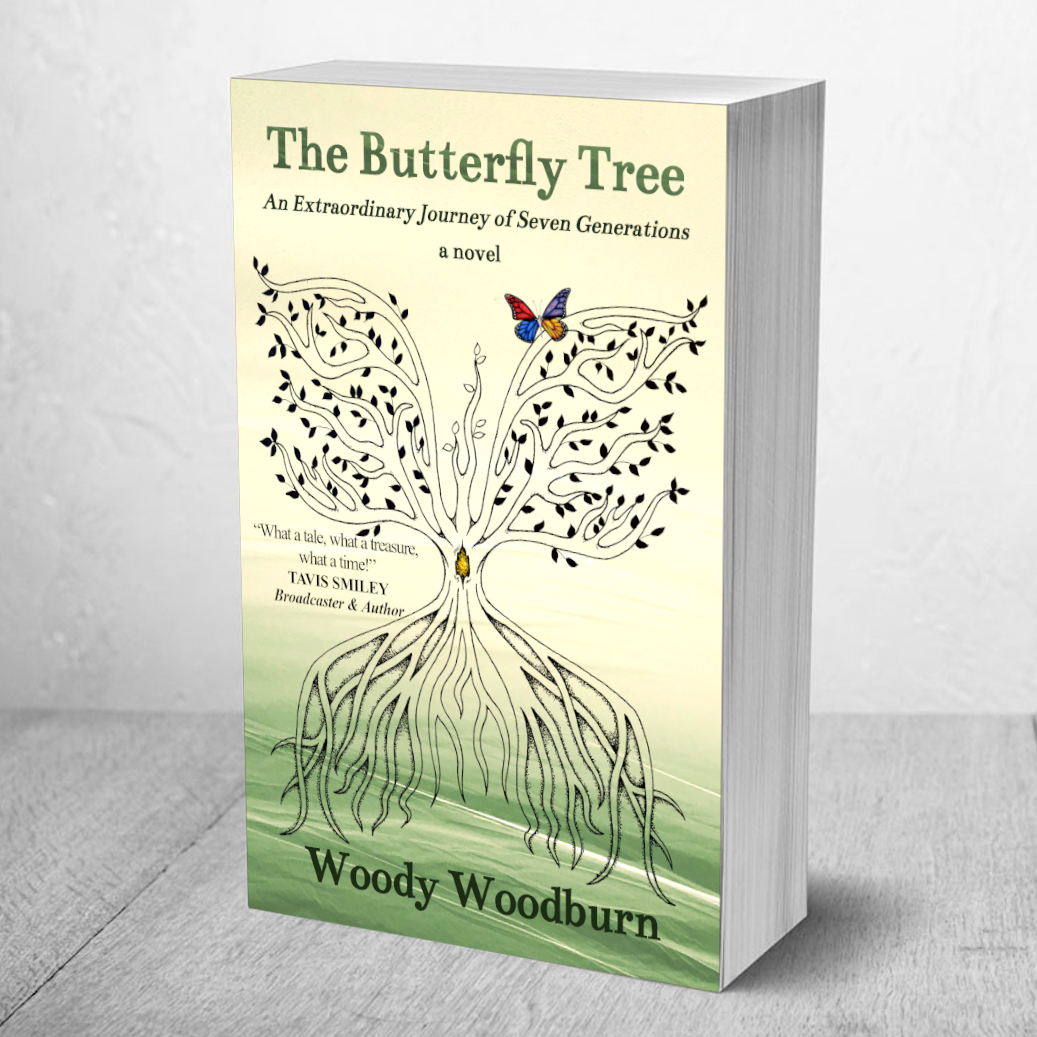
Woody’s new novel “The Butterfly Tree” is now available in paperback and eBook at Amazon (click here), other online bookstores, and is orderable at all bookshops.

*
Famous Song Lyric Sings True

Woody’s new novel “The Butterfly Tree” is available at Amazon (click here) and orderable at all bookshops.

*

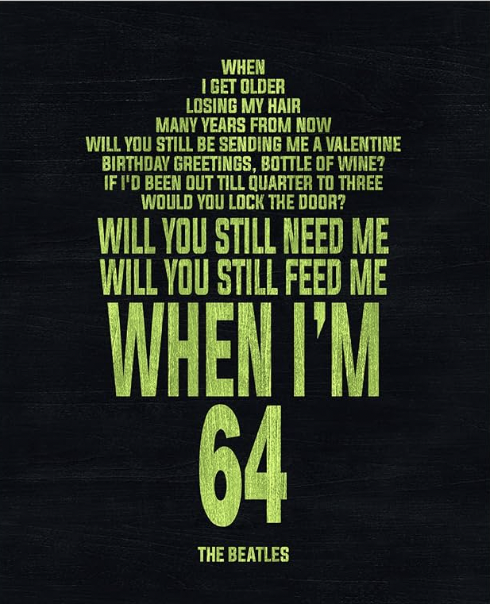
In late spring 1967, so late it was almost summer, the Beatles released “When I’m Sixty-Four” written by Paul McCartney when he was only 16.

At the time, for I had turned seven less than a week before, the song was far beyond my youthful comprehension. In truth, even in high school and college, and a good while beyond, I had a hard time imagining being 64…

…yet seemingly in a wink and a blink, come Memorial Day next week, the lyrics “many years from now” will have arrived for me and McCartney’s words will sing true as I reach this musical milestone age.

While I’m not yet “losing my hair” (thank you, Grandpa Ansel, for your thick-thatched genes) I do have three grandchildren (not “Vera, Chuck and Dave” but Maya, Auden and Amara) to bounce on my knee.

For some reason, perhaps because it was one of my favorite things to do when “When I’m Sixty-Four” first hit the airwaves, I have been reminiscing about riding bikes. In the 1960s, we kids could—and did!—hop on our stingrays in the morning and explore like Lewis and Clark all day long so long as we were home by dinner call.

Oh, the places we’d go! The fun we had! The things we’d do! We’d ride to our friends’ homes, ride to the five-and-dime, ride to the playground and swimming pool and tennis courts. We’d build wooden ramps to soar off, and have contests pedaling as fast as humanly possible before jamming on the coaster brakes with all our weight and try to not wipeout as the back tire locked and fishtailed on the pavement and whoever left the longest black comet tail won, all without bike helmets.

Sometimes, oftentimes, we also left knee and palm flesh behind on the pavement resulting in impassioned pleas for our moms not to spray Bactine—OUCH!!!—on the road rash for that hurt worse than the crashes.

The fall I most vividly remember happened the very first time I rode a two-wheeler solo. I had just turned four and to put an end to my pleading and begging and whining my two older brothers took turns teaching me to ride by running alongside holding the seat of one of their outgrown bikes to maintain my balance.

No doubt, dear reader, you know what happened next for you surely had the same experience when you learned to ride: the magical moment came when one of my brothers let go of the seat while I was concentrating wholly and simultaneously on pedaling and steering and controlling the wobbling and remaining upright—and without knowing it I was suddenly a human space capsule that had shed its booster rocket and was now soaring without assistance.

Down the sidewalk I rolled and, unable to maneuver a U-turn, I continued to pedal all the way around the block and when I came full circle my brothers were both gone…

…for Mom had called us inside for dinner.

Unfortunately, they had neglected to give me instructions for how to use the coaster brakes to stop. Moreover, the hand-me-down bike was a bit too tall for me to touch my feet to the ground, so around the block I went a second time, and a third, and still no one was waiting to help me stop without falling.

Falling, of course, is how I eventually stopped. I came inside in tears and in need of Bactine—and in a state of glorious happiness.

When I’m Sixty-Four next week I shall celebrate with a bike ride.

* * *

Essay copyrights Woody Woodburn

Woody’s new novel “The Butterfly Tree” is now available in paperback and eBook at Amazon (click here), other online bookstores, and is orderable at all bookshops.

*

Woody writes a weekly column for The Ventura County Star and can be contacted at WoodyWriter@gmail.com. Follow him on Twitter and Instagram at @woodywoodburn.

Being Cashless Proves Priceless

Woody’s new novel “The Butterfly Tree” is available at Amazon (click here) and orderable at all bookshops.

*

The after-party, no matter how marvelous the marquee event, sometimes proves even better.

Such was the case when My Better Half and I took a walking tour in Dublin, Ireland, that included historic Trinity College’s Old Library, including The Long Room, aptly named for it stretches 213 feet. By any measure it is one of the most beautiful libraries on the globe, a cathedral more than a library really, with more than 200,000 books filling 300-year-old molasses-dark oak shelves accompanied by rolling ladders tall as trees soaring skyward to a curved vaulted ceiling. Too, white marble busts of philosophers and writers and other eminent figures hold sentry.

The Long Room in Trinity College’s Old Library

Jimmy, our tour guide, was as Irish as the Blarney Stone and possessed the gift of gab magically afforded all who kiss it. Indeed, he was nearly as good a storyteller – seanchai in Gaelic meaning “bearer of old lore” – as anyone in the nearby Dublin Writers Museum, a ladder-tall claim considering it features James Joyce, Jonathan Swift, George Bernard Shaw, and W. B. Yeats to name a literary handful. When our afternoon tour concluded at Dublin Castle, Jimmy well deserved a monetary tip.

Alas, MBH and I found ourselves with no Euros bills and our collective coins were too embarrassingly small a sum to hand over. In a pinch, I asked Jimmy if we could tip him with a pint at a nearby pub.

“Brilliant!!!” he replied with at least three exclamation marks of enthusiasm, further proving his Irishness.

Eschewing the pubs at hand, Jimmy, a Dublin native in his late fifties with a twinkle in his eyes and a youthful spring in his step, took us on a roundabout half-hour stroll through his home city en route to his favorite drinking hole. Along the way he pointed out sights that had not been on the earlier tour and regaled us with new tales.

Passing Stephen’s Green Park, for example, Jimmy shared a memorable story from the 1916 Rising when British troops had seized the high ground atop a building bordering the park while insurgent Irish Citizens Army forces dug into trenches across the way – “and bullets whizzed back and forth.”

And yet each day at the stroke of high noon the park keeper, James Kearny, walked directly into the heart of the war zone and coolly headed to a large pond. He had negotiated a daily ceasefire and for one hour both sides allowed him to tend to his duty of feeding the ducks!

By the time we arrived at Jimmy’s preferred pub we were hitting it off like, well, ducks and water. Serendipity again winked at me for The Palace Bar has a long history as a “writers’ bar.” The age-darkened paneled walls are adorned with framed photographs and painted portraits of famous Irish authors – and newspapermen, too, especially from the 1940s and ’50s when this had been a hangout after putting the paper to bed.

Directly above and behind our table, as if he were eavesdropping on Jimmy’s enchanted storytelling, hung a large portrait of James Joyce. At one point, Jimmy raised his quickly emptying pint glass toward James and said, “To old writers I’ve read and a new writer I only just met – slainté (health)!”

So enjoyable was this private after-party that when our three glasses emptied Jimmy phoned a friend to delay their dinner plans elsewhere and we ordered a second round. On a priceless day that included seeing The Long Room and the celebrated Book of Kells, circa 800 A.D., the highlight proved to be running short on cash for a tip.

* * *

Essay copyrights Woody Woodburn

Woody’s new novel “The Butterfly Tree” is now available in paperback and eBook at Amazon (click here), other online bookstores, and is orderable at all bookshops.

*
Woody writes a weekly column for The Ventura County Star and can be contacted at WoodyWriter@gmail.com. Follow him on Twitter and Instagram at @woodywoodburn.

Willy Wonka’s Golden Tattoo

Woody’s new novel “The Butterfly Tree” is available at Amazon (click here) and orderable at all bookshops.

*

“So, how Irish are you?” the bartender offered in greeting, his brogue thick as lamb stew and suggesting his own blood pulsed shamrock green.

The question was posed to an American tourist in Dublin, in a celebrated pub now named Kennedys (no apostrophe) but called Conway’s long ago when literary luminaries Oscar Wilde, Samuel Beckett, and James Joyce frequented it, and perhaps insisted on the use of an apostrophe, with the latter even featuring it in his epic novel “Ulysses.”

How Irish am I? Rather than offer a long soliloquy about my third great-grandfather emigrating from County Cork two and a half centuries past at age 14, forever leaving behind everyone he knew while fleeing famine for fertile farmland in Ohio, I answered succinctly by lifting my pants leg above my left calf.

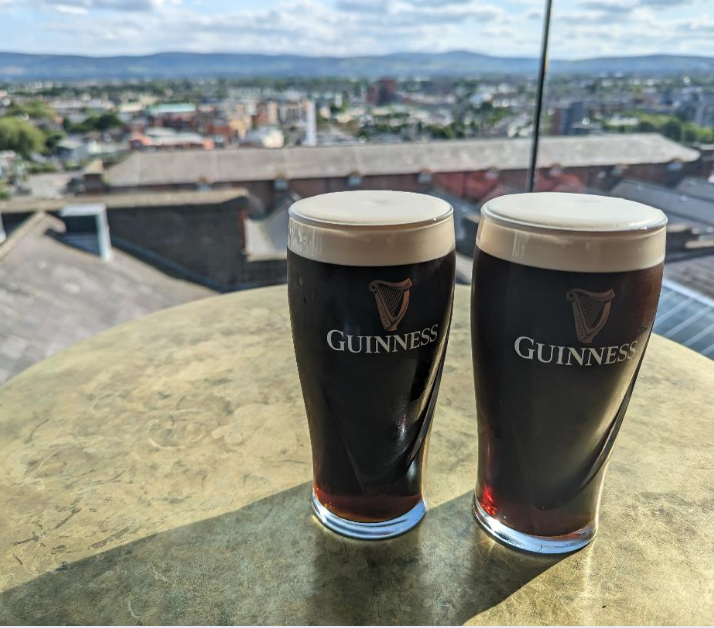
The bartender nodded appreciatively and a moment later placed a pint of Guinness before me, proclaiming with enthusiasm: “On the house!”

The kindly reaction was attributable to the tattoo above my ankle, a fist-sized harp, Ireland’s national symbol—and trademarked logo of Guinness. I was inspired to get the body ink a decade ago while visiting my ancestral home for the first time and sensing the echoes of my distant relatives in the emerald hills of Cork.

Next evening at a different pub, this time unprompted, I wordlessly ordered a Guinness by displaying my tattoo and promptly received another free pour.

A third pub, a hat-trick complimentary black nectar, and I realized I had Willy Wonka’s Golden Ticket in my pocket—in my skin, rather. Indeed, for the entirety of our weeklong stay in Ireland, most everywhere My Better Half and I had drinks my initial Guinness was happily served gratis.

The best part of flashing my golden tattoo, black though it be, was not the free flow of stout—it was the conversations that flowed following the inked ice-breaker.

At Smithwick’s brewery in Kilkenny, for example, a bartender named Eoin affably asked if I had any Irish heritage. In reply, I showed my harp and shared the emigration story of my third great-grandfather James Dallas. Eoin poured us each a pint of a private reserve blonde ale not yet marketed and then surmised the surname Dallas might have originated from Daly’s Cross about an hour’s drive north of Cork.

Alternately, a barkeep at The Palace Bar in Dublin told me the Irish surname Daly is derived from the Gaelic Dálaigh, and that either version might have been “Americanized” to Dallas.

At the Irish Emigration Museum, also in Dublin, my inked harp gained deeper meaning when I learned this: on December 8, 1891, Samuel O’Reilly, an Irish-American, received U.S. Patent No. 464,801 for…

…the first electric tattoo gun.

Famed Irish poet William Butler Yeats once said of his motherland, “There are no strangers here; Only friends you haven’t yet met.” So it was in a lively pub, again in Dublin, when MBH and I accidentally crashed a 40th birthday party. No sooner had we found two empty stools at the far end of the bar when the husband throwing the celebration for his wife sidled over to us.

It was my birthday as well, a coincidence I shared, and instantly we were guests of honor as Liam introduced us to his wife, Marie, and their comely daughter and strapping son. After we had chatted like old friends for a good while, Liam told my wife: “You’re husband is the most American-looking American I’ve ever seen.”

With that, I revealed my ankle art.

“By god!” Liam sang. “You’re actually an Irishman! Sláinte (health)!”

* * *

Essay copyrights Woody Woodburn

Woody’s new novel “The Butterfly Tree” is now available in paperback and eBook at Amazon (click here), other online bookstores, and is orderable at all bookshops.

*
Woody writes a weekly column for The Ventura County Star and can be contacted at WoodyWriter@gmail.com. Follow him on Twitter and Instagram at @woodywoodburn.

Serendipity Smiles at St. Andrews

Woody’s new novel “The Butterfly Tree” is available at at Amazon (click here) and orderable at all bookshops.

*

At St. Andrews Golf Club serendipity smiled and the normally gelid seaside weather on Scotland’s east coast grinned warmly as well.

That is to say the sun was out and the wind blowing off the North Sea was only strong enough to steal a hat, or snap a kite string, not carry away big dogs and small children as is the norm. Nonetheless, even wearing a zippered pullover pulled over a sweater, my teeth chattered and I felt pity for golfers who play here when half-frozen raindrops blow sideways and sting faces like angry bees.

By happy chance, My Better Half and I visited the iconic “Old Course” on a Sunday. Turns out that the original church of golf, established 1554, is closed to golfers on the Sabbath and open to the general public, even tourists from America, to stroll at their leisure.

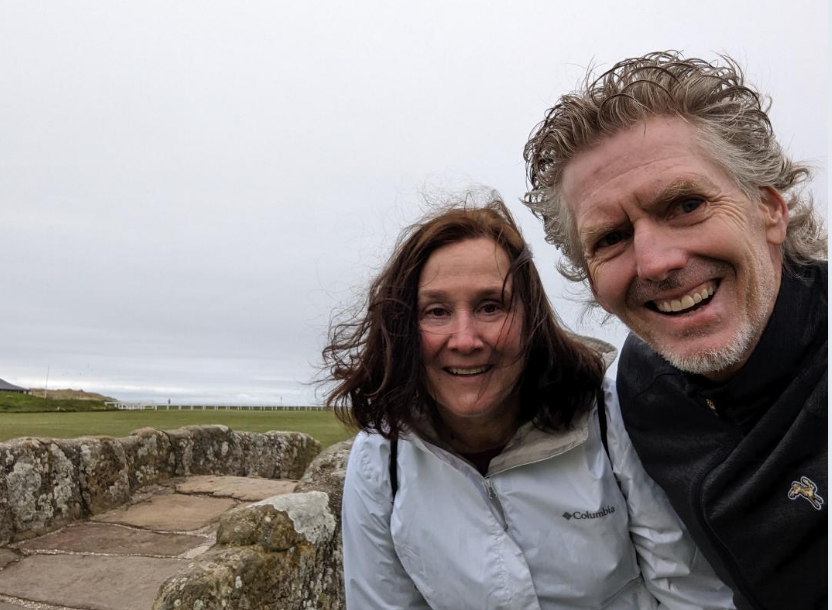
The Swilcan Bridge on a wind-swept (as usual) day at St. Andrews.

And so it was we joined a hundred people or more wandering the famous links, and a couple dozen dogs too, the latter all off leash and free to do their business with nary a plastic bag in any owner’s possession, raising the question: what’s the lift-and-clean rule for a terrier tainted Titleist?

MBH and I walked 12 strokes worth of holes out and back, three par-4s, including crossing the landmark Swilcan Bridge on the 18th fairway. Walked them in even par, I suppose, considering neither one of us lost a shoe—or one another—in the carnivorous gorse.

The fairway grass, fescue to be specific, is as hardy as steel wool and thus the weekly Sunday stampedes cause no visible damage. Too bad, perhaps, because anything that makes the Old Course play more difficultly is “brilliant” in the Scots’ minds.

All the same, traipsing around—even the putting greens are not off limits—seemed as unimaginable as touching the Mona Lisa. It was like enjoying a picnic on Wimbledon’s venerable Centre Court.

Speaking of lunch, the clubhouse is also open to the general public and so MBH and I grabbed a bite at the Tom Morris Bar & Grill where we enjoyed a picture-window seat overlooking the course and I savored a “Tom’s Burger” with grass-fed Scotch beef that was second to none I have ever tasted. Its juicy messiness proved a stroke of good luck as it necessitated washing up…

…which I did, I kid you not, in the locker room used by legendary golfers during the British Open. The dark wooden lockers are numbered with polished brass plates and an attendant kindly guided me to those specifically reserved for Jack Nicklaus and Arnold Palmer and Tiger Woods.

One final unexpected thrill presented itself. The Old Course runs adjacent to the North Sea alongside the very beach, West Sands, where the quintessential scene in “Chariots of Fire” was filmed showing the British Olympic track team running in slow-motion, barefoot all, splashing through shallow surf.

Although I had gone for an 11-mile run earlier in Edinburgh, in shoes, I was inspired to add a bonus mile just for the memory of it. Up the beach once and back I jogged, not barefoot but seemingly in slow-motion thanks to soft sand and hard blustery winds pushing me sideways. In my mind’s ear I heard the unforgettable Oscar-winning musical score by composer Vangelis Papathanassiou.

Despite the biting chill, I had company. A rookery of novice surfers, wisely wearing full wetsuits with hoods and booties, was taking a group lesson. Their instructor, however, apparently half-Scot and half-seal, rode the waves attired in boardshorts only.

Next week: An Irish version of Willy Wonka’s Golden Ticket.

* * *

Essay copyrights Woody Woodburn

Woody’s new novel “The Butterfly Tree” is now available in paperback and eBook at Amazon (click here), other online bookstores, and is orderable at all bookshops.

*

Woody writes a weekly column for The Ventura County Star and can be contacted at WoodyWriter@gmail.com. Follow him on Twitter and Instagram at @woodywoodburn.