
Growing an Old Friend Takes Time

Coach John Wooden, during the two decades I was blessed to be his friend, told me many, many wise things – “Wooden-isms” I like to call them – including this gem: “It takes a long time to grow an old friend.”

I think of these words every time my wife is on the phone with Nanette, for they met a long time ago, all the way back in kindergarten, back in the Midwest, back in the early 1960s, and their friendship has been growing ever since. Despite thousands of miles between them literally, and even more miles figuratively along life’s roads of moves and college and marriage and families and more, they have remained dear friends.

I wish you could hear them on the phone together. I bet you have a similar rare friend. When they chat it is a time machine and they remain forever young, forever 5, or forever 11 when Lisa moved away from Northern Ohio to Southern California. Every few years, when phone calls simply won’t suffice, they meet up in various vacation cities for a girls’ weekend.

My daughter, Dallas, does Lisa and Nanette even better for a friendship starting age. She and Mikey planted the seed of an old friendship when they were 3 years young in daycare. They proceeded to go through school together, from kindergarten to senior year in high school, and did not lose touch after graduation. Indeed, a full three decades after they first took naps side by side on their sitter Jeanie’s living room floor, these two first-ever friends remain among each other’s best ones.

And yet the gold medal for a green thumb at growing an old friend, in my firsthand observation, is my 96-year-old dad who has a childhood friend of nearly that full life span. Although Lilly still lives in Urbana, Ohio, where they grew up together, they talk on the phone nearly weekly.

I, too, have tried to put Coach’s wisdom into practice. Although my family moved away from my birthplace of Columbus, Ohio to Ventura when I was 12, I have remained friends with an elementary school classmate who was also my tennis doubles partner. Jim Hendrix, a lefty with a wicked slice serve, was almost as magical with tennis strings as his famous namesake was with guitar strings and helped carry us to quite a few championship trophy victories. He eventually played at Ohio State where his father had once been the Buckeyes’ head coach.

An Irish proverb, and I have distant shamrock roots, says: “A good friend is like a four-leaf clover; hard to find and lucky to have.” Lucky for me on the first day of classes in seventh grade most of my teachers made their seating charts alphabetically. As a four-leaf-clover result, I found myself sitting next to Mark Wilson and Brian Whalen in quite a few classes.

I instantly had two new friends. We called ourselves “The Three W’s” and were as inseparable as the Three Musketeers all the way through high school. We were “That 70’s Show” 20 years before it aired, hanging out in Mark’s family room playing bumper pool and listening to music and watching “Fernwood 2 Night” and just being goofy teens.

But life, as it will, eventually took us on different paths, near and far. Slowly our contact faded mostly to Christmas cards. Lucky us, in the past decade we reconnected after all three W’s wound up physically close once more in Ventura County.

A brand-new reconnection with an old friend is where we will pick up in next week’s column.

*   *   *

Essay copyrights Woody Woodburn

Woody writes a weekly column for The Ventura County Star and can be contacted at WoodyWriter@gmail.com. Follow him on Twitter and Instagram at @woodywoodburn. His SIGNED books are available at www.WoodyWoodburn.com.
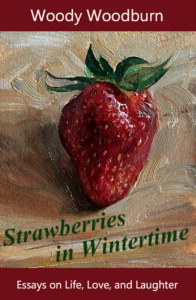
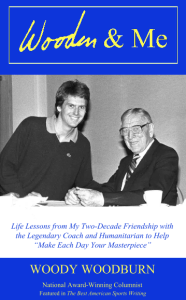
Personalized Signed copies of WOODEN & ME: Life Lessons from My Two-Decade Friendship with the Legendary Coach and Humanitarian to Help “Make
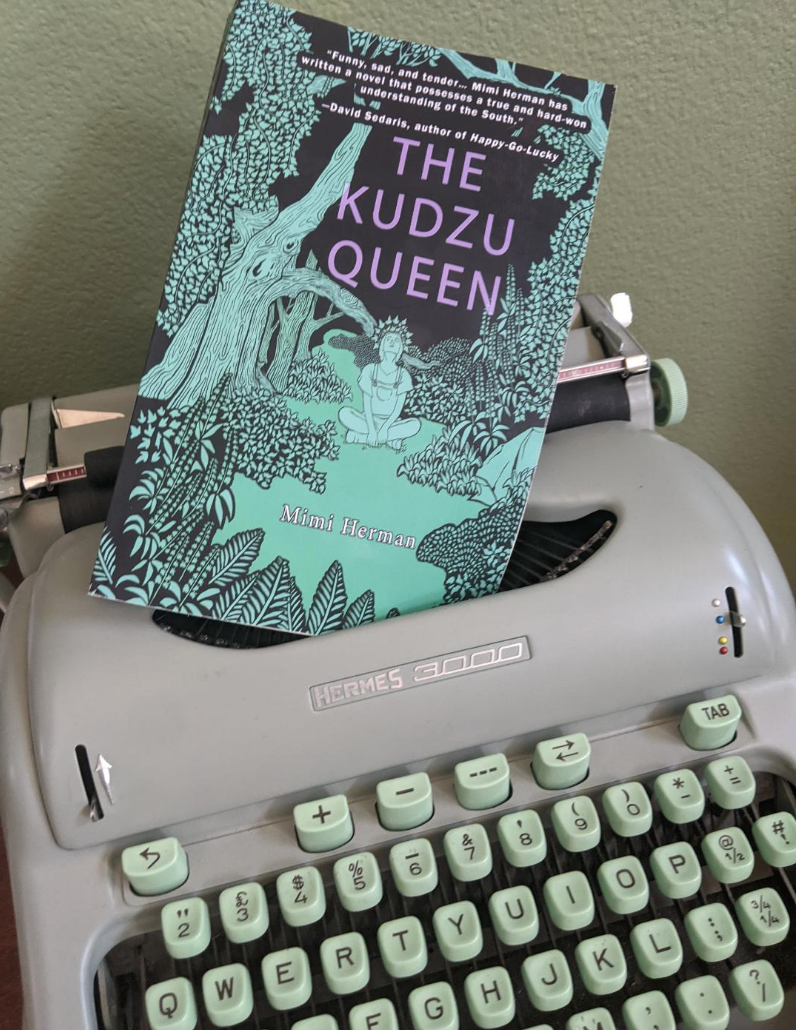
Knocked Out by “The Kudzu Queen”

“What really knocks me out,” Holden Caulfield says in “The Catcher in the Rye,”  “is a book that, when you’re all done reading it, you wish the author that wrote it was a terrific friend of yours and you could call him up on the phone whenever you felt like it.”

Mimi Herman’s newly released debut novel, “The Kudzu Queen” (Regal House Publishing), KO’d me so completely I felt like calling her up on the phone even though we have never met.

Instead, I reached out through social media and she graciously responded from her home in North Carolina, where TKQ takes place, albeit in the early 1940s. Before I share some of our correspondence, let me share a little about her 320-page gem.

Lee Smith, a New York Times best-selling author, calls the narrator, 15-year-old Mattie Watson, “the most appealing young heroine since Scout” in “To Kill a Mockingbird.” Praise doesn’t come much taller than that.

Rather than being hyperbole, I think the favorable comparison to Scout actually falls short of doing Mattie full justice. In my eyes she even more so reminds me of Scout’s father, Atticus Finch, one of the most beloved characters in American literature. Mattie, like Atticus, has a golden heart and a backbone of steel and a conscience like the needle of a compass that always knows where the North Star is. I asked Herman if she agreed with my assessment.

“Mattie is mature for her age,” Herman replied, “so I can see her sounding like Atticus. In my mind, Mattie is what Scout (who is younger) might have grown up to be as an adolescent, and since both Scout and Mattie are in many ways shaped by their admirable parents, I can see the connection. Lately, I’ve been saying that I think Mattie’s parents are what Atticus might have been if he’d been divided into a mother and a father.”

Kudzu, by the way, is a plant that grows a “mile-a-minute” and has been called “the vine that ate the South.” I will not reveal the novel’s plot, other than to say it is a page-turner featuring a protagonist to admire; a handsome charlatan whose evilness outgrows kudzu; families, both tightly knit and torn apart; friendships and feuds; heart and humor; tears and fears; twists and turns.

Beyond the story itself, I fell in love with Herman’s writing. She is an acclaimed poet and this shines through in her long-form writing as she routinely makes a handful of words do the work of a hundred.

“I am fierce in my writing and revising about making sure each word, each sentence, each description, each line of dialogue is perfectly tuned, so it resonates,” Herman shared, noting her original manuscript was a whopping 680 pages.

The result of this poet-like approach is sentences that read like stanzas and paragraphs resembling sonnets. I would have finished reading TKQ in three nights instead of four had I not spent so much time rereading, even re-rereading, so many lovely passages in order to savor them fully.

Here is but one example chosen from dozens of passages I underlined, a single sentence that sums up a hundred previous pages. It is after a terrible fire, after a death too, and after a third tragedy as well: “Danny stayed with Mr. Cullowee, to tend whatever was left to tend on the farm that wasn’t a farm anymore, by the house that had stopped being a house after it ceased to be a home.”

Written by my new friend, Mimi, an author who has not stopped being a poet.

*   *   *

Essay copyrights Woody Woodburn

Woody writes a weekly column for The Ventura County Star and can be contacted at WoodyWriter@gmail.com. Follow him on Twitter and Instagram at @woodywoodburn. His SIGNED books are available at www.WoodyWoodburn.com.

Personalized Signed copies of WOODEN & ME: Life Lessons from My Two-Decade Friendship with the Legendary Coach and Humanitarian to Help “Make Each Day Your Masterpiece” and  “Strawberries in Wintertime: Essays on Life, Love, and
Valentine’s Day Is More Than Candy

It is easy to view Valentine’s Day – which will once again sneak up, on tiptoes, on a lot of forgetful boyfriends and husbands a few days hence – through jaundiced eyes as a holiday contrived for selling greeting cards and flowers, fancy chocolates and fancier restaurant dinners.

Looking through long-stem roses colored glasses, however, Cupid’s big day always reminds me of weddings. This of course includes my own, although admittedly the ceremony and reception – held before nuptial videography became en vogue – are a blur. Forty years later, I wish we had a videotape to fill in our memories.

Indeed, after watching my beautiful bride walk down the aisle to meet me at the pulpit, everything else – the verse readings, the minister’s words, our vows and our first kiss as husband and wife, the giddy walk on air with helium in our shoes back down the aisle together, the reception line, toasts given, our first dance, even how in the world one of the groomsmen wound up in a swimming pool in his tux – is pretty much all lost in the fog of time.

Given a time-machine trip back to Sept. 4, 1982, I would make a concentrated effort to stop and smell the bridal bouquet, so to speak, and savor more specific moments from the whirlwind day.

The next best thing to a time machine, for me, is going to weddings. Sitting in a church pew, or nestled around a gorgeous garden spot or gathered together overlooking the ocean, allows one to experience the pomp and circumstance much more clearly than can the two people standing front and center – and excited and overwhelmed – taking their vows.

Being a wedding spectator offers the chance to vicariously be the groom or bride again, this time with the advantage of not being bowled over by the occasion, and woos you to silently renew your own vows and commitment as you watch the marquee couple do so.

To be certain, it is almost impossible not to have your own heart chirp in song while watching two lovebirds join The Matrimony Club. The next time you are at a wedding, when the bride and groom are saying their vows, slyly peek around and notice how many married couples in attendance reach down and squeeze each other’s hands; after their big kiss, see how many little kisses among wedded spectators follow.

Another thing I like to do, if it hasn’t been mentioned among the toasts, is to ask the bride and groom how they met. Even if their “meet-cute” was not the stuff of a Nora Ephron movie, the blissful couple will always light up in retelling.

Meanwhile, listening to their tale always lightens my heart and reminds me of my own enchanted first encounter that led to “for better, for worse, in sickness and in health…”

Valentine’s Day, like weddings, affords a similar opportunity to be inspired by love. If you go for a walk along the beach this February 14th, or out to a restaurant, you will have no trouble picking out the dating couples and newlyweds and recently-weds.

Equally heartening are the couples you can tell have been together for a long, long time yet still glow like they are newly in love. If there were a polite way to do so, I would love to interrupt these veteran darlings and ask how they met – and their secrets to keeping the magic alive.

I have a strong hunch some of them might mention that going to weddings always results in being struck by a rejuvenating arrow from Cupid’s bow.

*   *   *

Essay copyrights Woody Woodburn

Woody writes a weekly column for The Ventura County Star and can be contacted at WoodyWriter@gmail.com. Follow him on Twitter and Instagram at @woodywoodburn. His SIGNED books are available at www.WoodyWoodburn.com.

This image has an empty alt attribute; its file name is 1StrawberriesCover-196x300.png
This image has an empty alt attribute; its file name is Wooden-Me-cover-mock-up-186x300.png

Personalized Signed copies of WOODEN & ME: Life Lessons from My Two-Decade Friendship with the Legendary Coach and Humanitarian to Help “Make Each Day Your Masterpiece” and  “Strawberries in Wintertime: Essays on Life, Love, and
Meal as Special as Murano Glass

In Italy, in Venice, in a small shop in a labyrinth of narrow alleyways, my wife and I bought eight water glasses of hand-blown glass made on the nearby famous island of Murano. Each is of a different main color – midnight blue, sky blue, green, yellow, red, orange, white, black – with swirls and teardrops and other designs in contrasting colors.

They have one more striking characteristic: their shape looks like a paper cup that has been crushed in one’s hand, or stomped flat underfoot, then pushed out whole again with the wrinkles unsuccessfully smoothed out. This purposeful imperfection makes them perfectly beautiful.

These exquisite tumblers tumble to mind when I think about the final meal my wife and I had on our recent dream trip celebrating our 40th wedding anniversary. At first appearance, the restaurant in Barcelona, the last stop of our two weeks abroad, looked like a smashed paper cup but in the end it proved to be like masterful Murano glasswork.

Lobster paella was not to be missed — but almost was.

As mentioned here a week ago, on the very first evening of our travels, at an outdoor table under the stars overlooking the Grand Canal in Venice, I had the best spaghetti of my life at a tiny trattoria named Carpaccio.

In the Gothic Quarter, in the historic centre of the old city of Barcelona, Lisa and I set out on foot in search of dinner with no recommendations or idea of where to eat. We had decided, as we often do on vacation, to let our dining destination be determined by serendipity – and, this night specifically, by having paella on the menu for we had not yet sampled this locally.

Aranega’s Restaurante was so small as to be called a mouse-hole-in-the wall. We did not find it so much as the proprietor found us by materializing out of nowhere directly in our path on the sidewalk and handing us two flat laminated menus. Politely, though unenthusiastically, we glanced at the menus, but unlike at many eateries here with English translations – and like Aranega’s sandwich chalkboard displaying a lengthy Menu del Dia – the offerings were in Spanish only. Sensing our language illiteracy, he disappeared through the doorway and quickly reappeared with an English version.

With our appetites rumbling, for we had been walking a long time looking for the ideal restaurant; and with trepidation, for this establishment looked to be only a step above fast food, we perused the new menu albeit with low expectations. As we did so, the owner again vanished inside.

While he was gone, Lisa and I both spotted it at the same time: lobster paella.

The owner returned carrying a two-top table and set it up on the sidewalk, for the evening was too pleasant to waste eating indoors, and without delay next brought out two chairs and gently guided us to sit down.

A waiter, an affable young man who we learned was the owner’s son, took our order; told us one serving would fill us both; and added that it would take half an hour to freshly prepare.

“We’re in no hurry,” we replied, ordered sangrias, and enjoyed people watching and reliving highlights from the past fortnight.

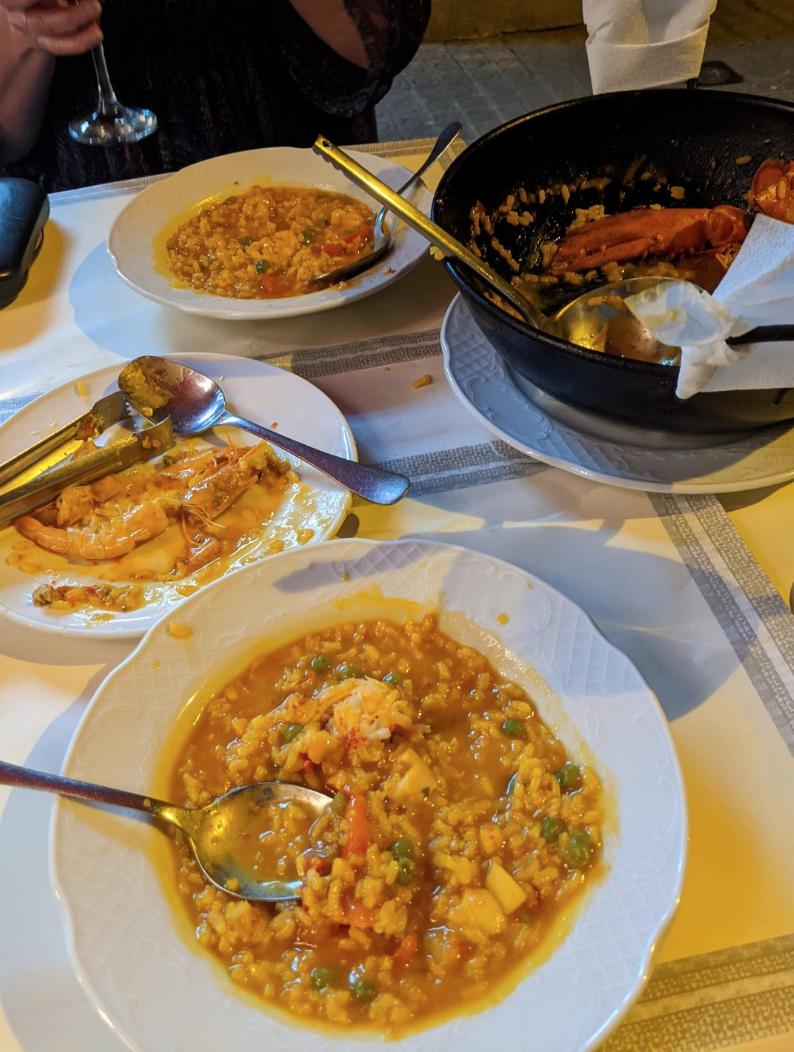
The lobster paella required closer to a full hour, and two sangrias each, before arriving; was served in a giant communal cast-iron bowl, steaming hot, with a full crustacean shell swimming in soupy rice; and was beyond worth the long wait.

Indeed, like Maria’s spaghetti at Carpaccio, it was as exquisite as Murano hand-blown glass. Together, the bookend meals were masterpiece ways to begin and end a masterpiece trip.

*   *   *

Essay copyrights Woody Woodburn

Woody writes a weekly column for The Ventura County Star and can be contacted at WoodyWriter@gmail.com. Follow him on Twitter and Instagram at @woodywoodburn. His SIGNED books are available at www.WoodyWoodburn.com.

Personalized Signed copies of WOODEN & ME: Life Lessons from My Two-Decade Friendship with the Legendary Coach and Humanitarian to Help “Make Each Day Your Masterpiece” and  “Strawberries in Wintertime: Essays on Life, Love, and